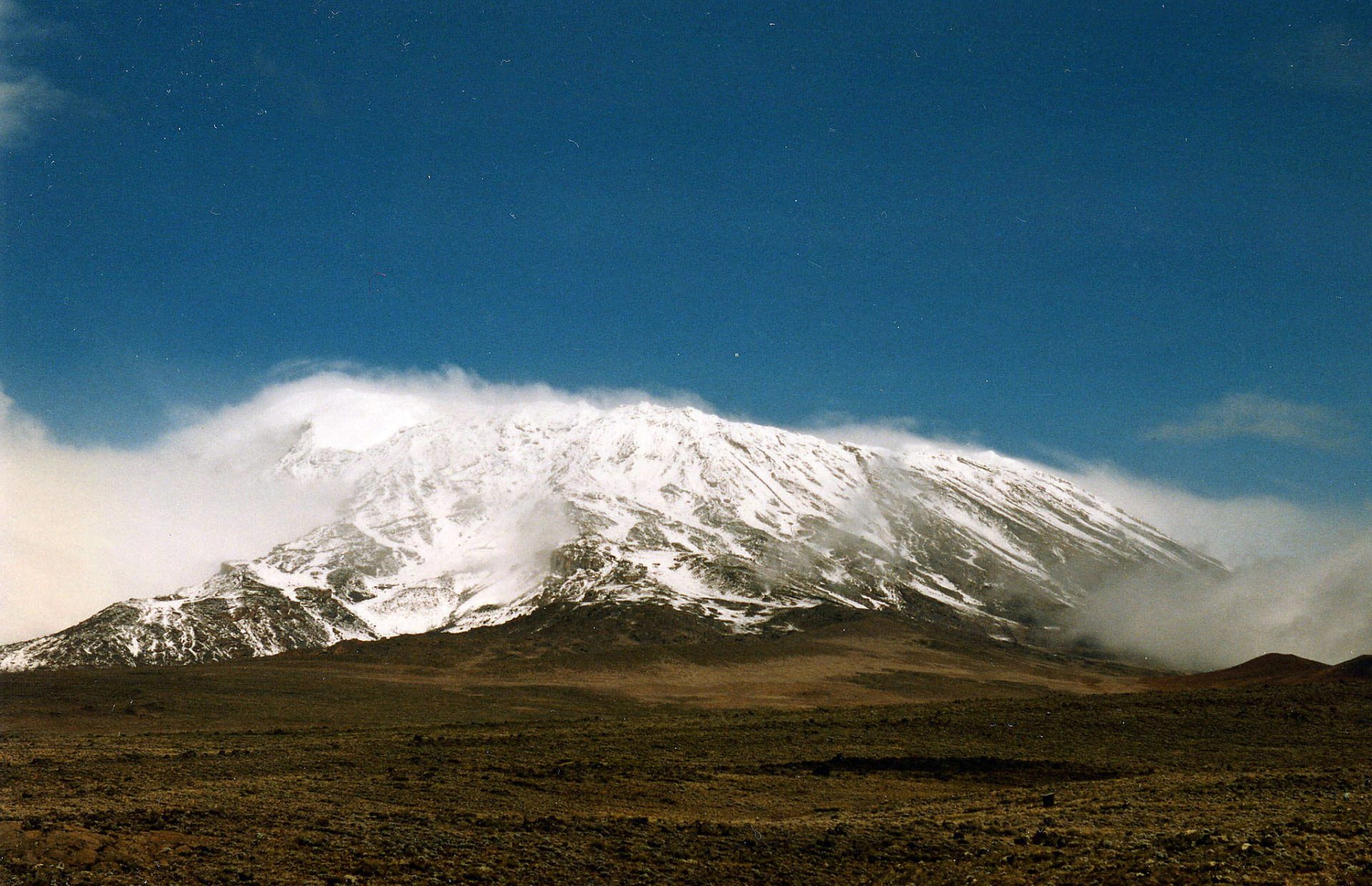
Standing tall above the savannahs of East Africa, Mount Kilimanjaro (5,895 m / 19,343 ft) is an icon of the continent – the highest mountain in Africa, one of the Seven Summits, and probably the highest free-standing mountain in the world. For many visitors, climbing Kilimanjaro is a once-in-a-lifetime challenge, taking in muddy rainforest, other-worldly high-altitude flora, and alpine meadows before the glacier-coated summit.
How hard is climbing Kilimanjaro?
Kilimanjaro can be summited without technical gear or extreme mountaineering experience, and fairly affordably – but don’t underestimate it: summit success rates hover around 50–60%. What it demands is willpower, a healthy body, a sense of humour, sensible acclimatisation, and a little luck.
The seven Kilimanjaro routes
The main trekking routes are Marangu, Machame, Lemosho, Shira, Rongai, the Northern Circuit, and Umbwe. Longer routes (7+ days) give better acclimatisation and markedly higher summit success.
The Lemosho Route and Kilimanjaro’s five climate zones
The Lemosho Route is a favourite for its gradual altitude gain and first night below 10,000 ft. The climb passes through five distinct climate zones: bushland and farmland to about 1,800 m, lush rainforest to 2,800 m, sparse moorland to 4,000 m, stark alpine desert to 5,000 m, and finally the arctic summit zone, where glaciers crown the roof of Africa.
Can you combine Kilimanjaro with a safari?
Absolutely – most climbers pair the mountain with the Serengeti, Ngorongoro, or Tarangire, or view Kili from the Kenyan side in Amboseli on a Kenya safari. See our mountaineering safaris for climb packages.
Is hiking Kilimanjaro worth it?
Unquestionably. Towering above the plains with a hefty challenge attached, reaching Uhuru Peak is an achievement hikers, athletes, and nature lovers carry for a lifetime. Start planning your climb.