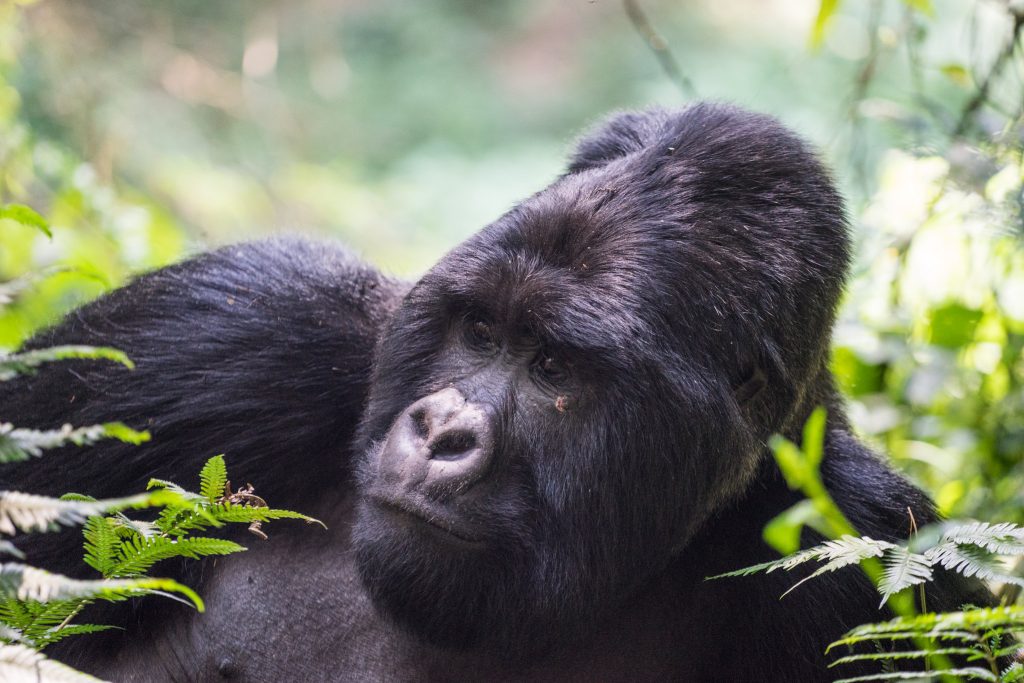
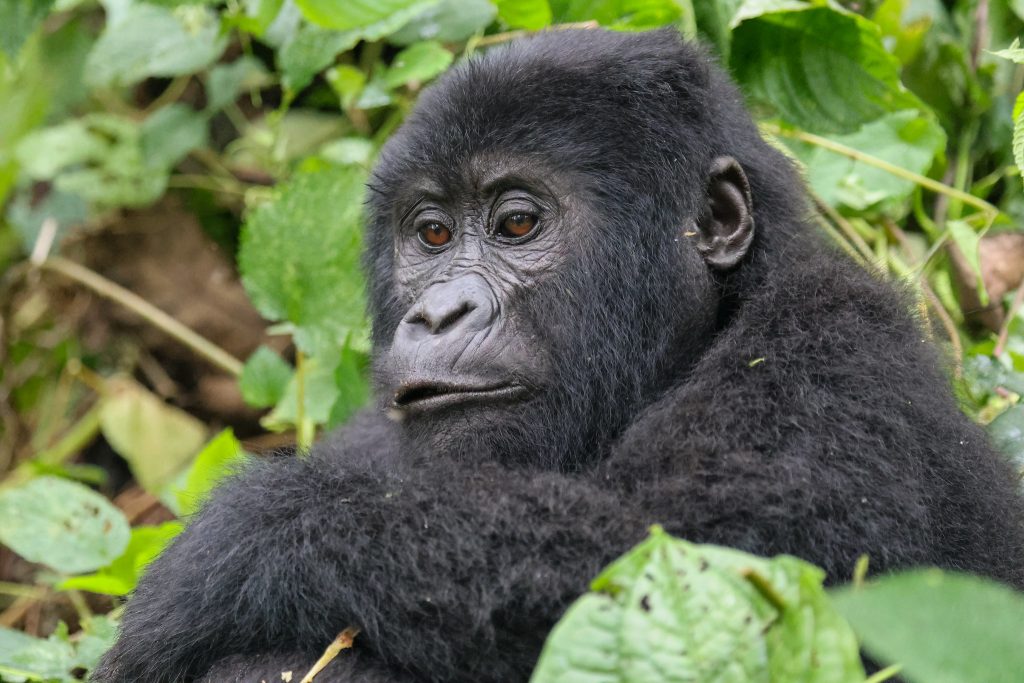
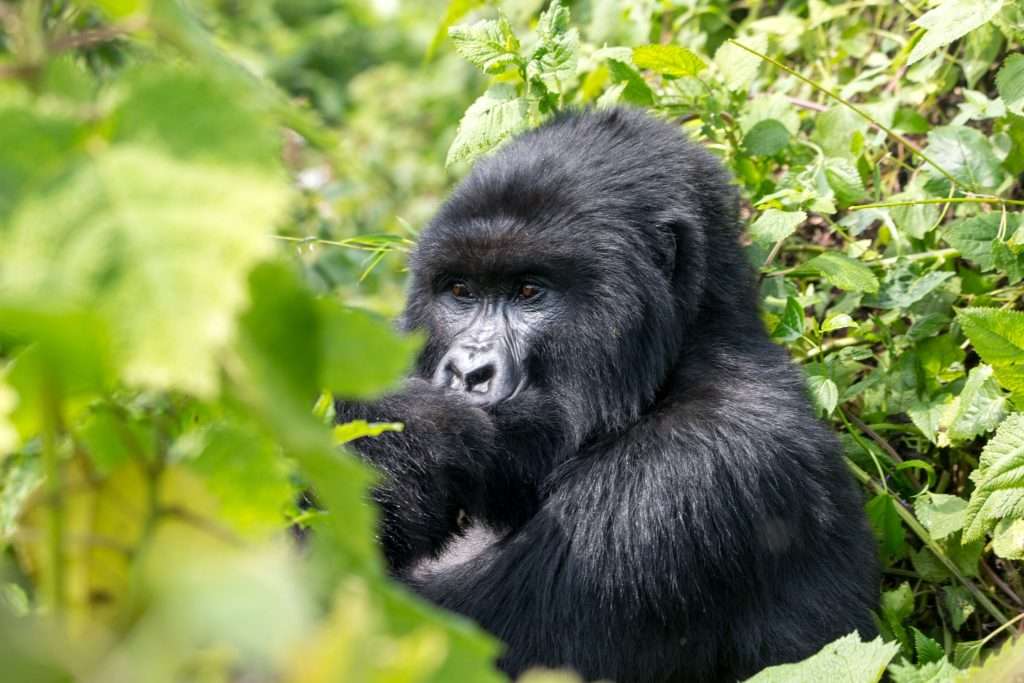
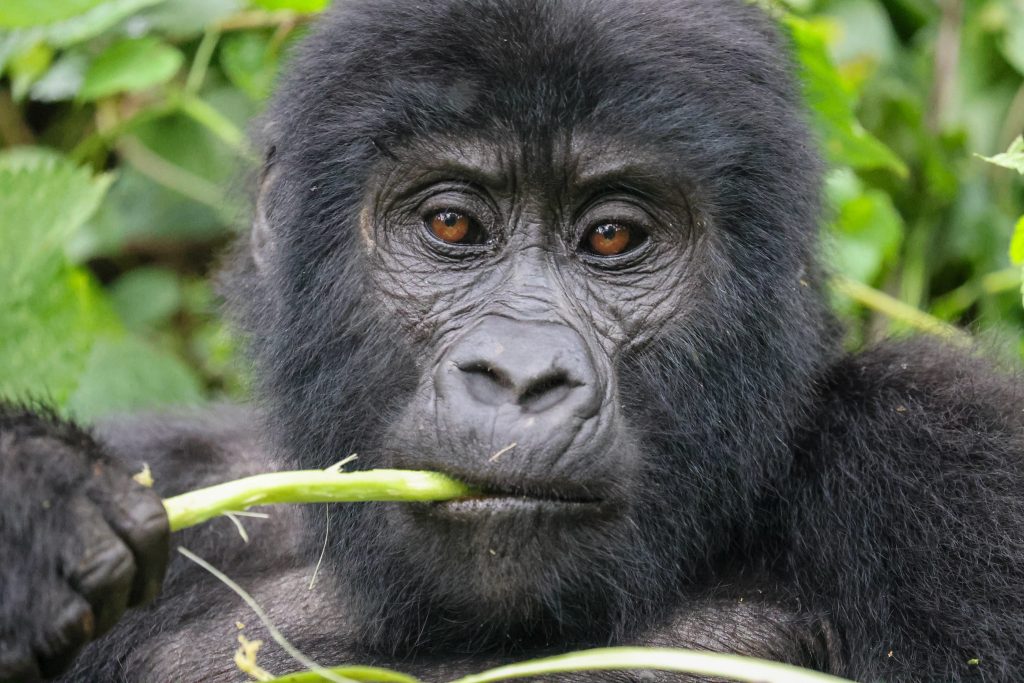
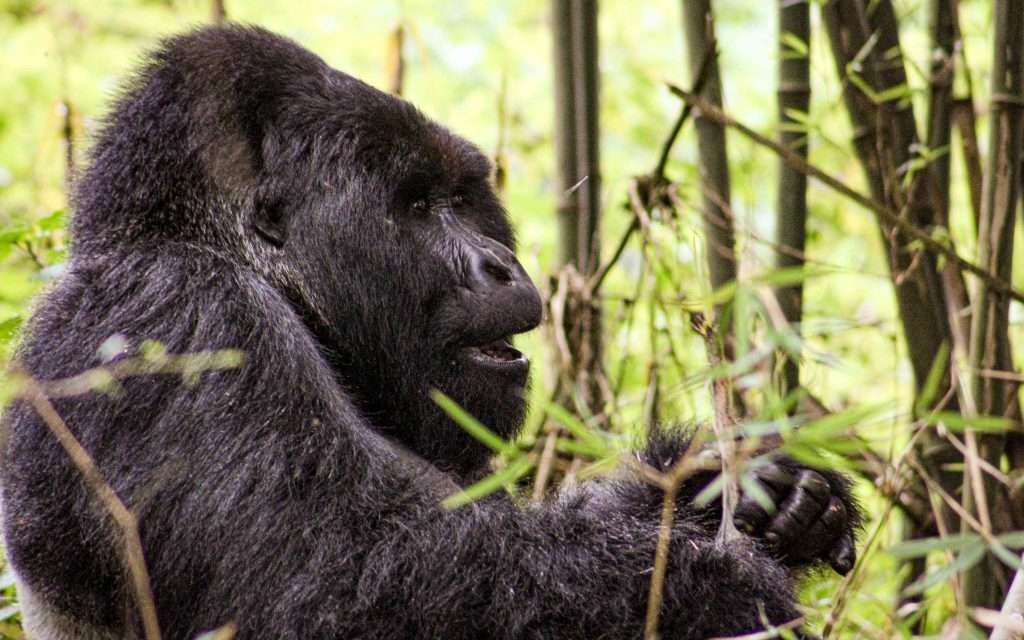
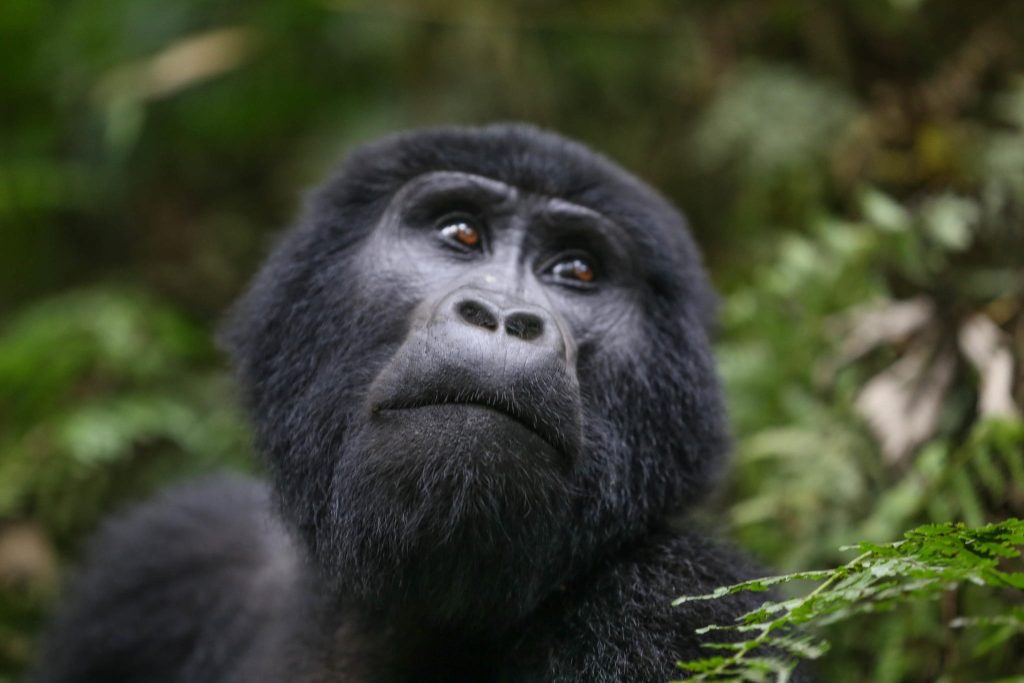
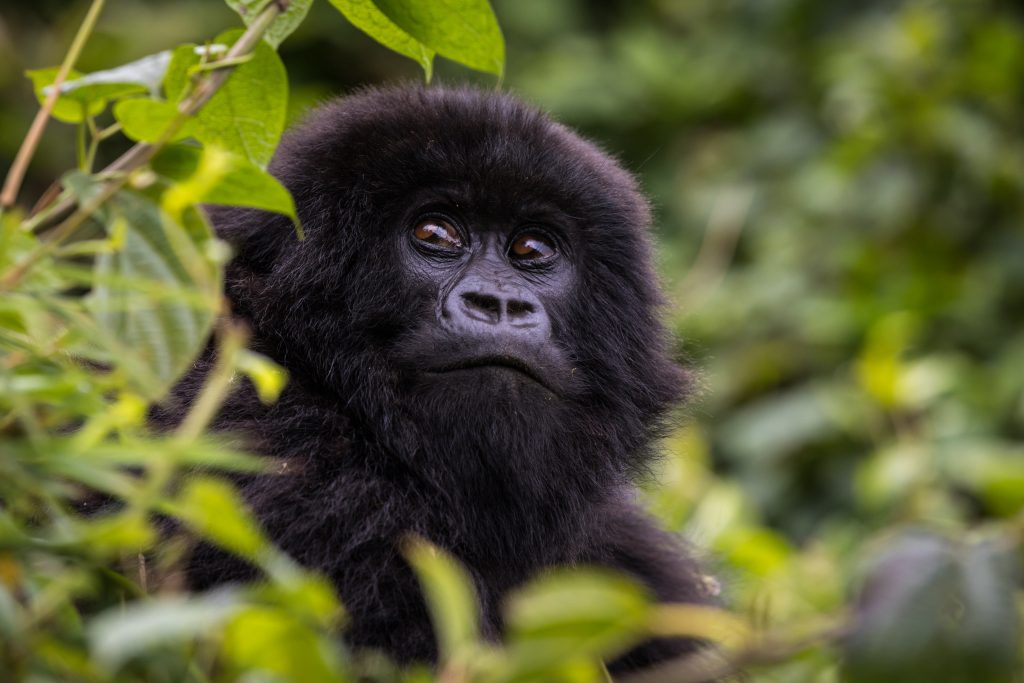
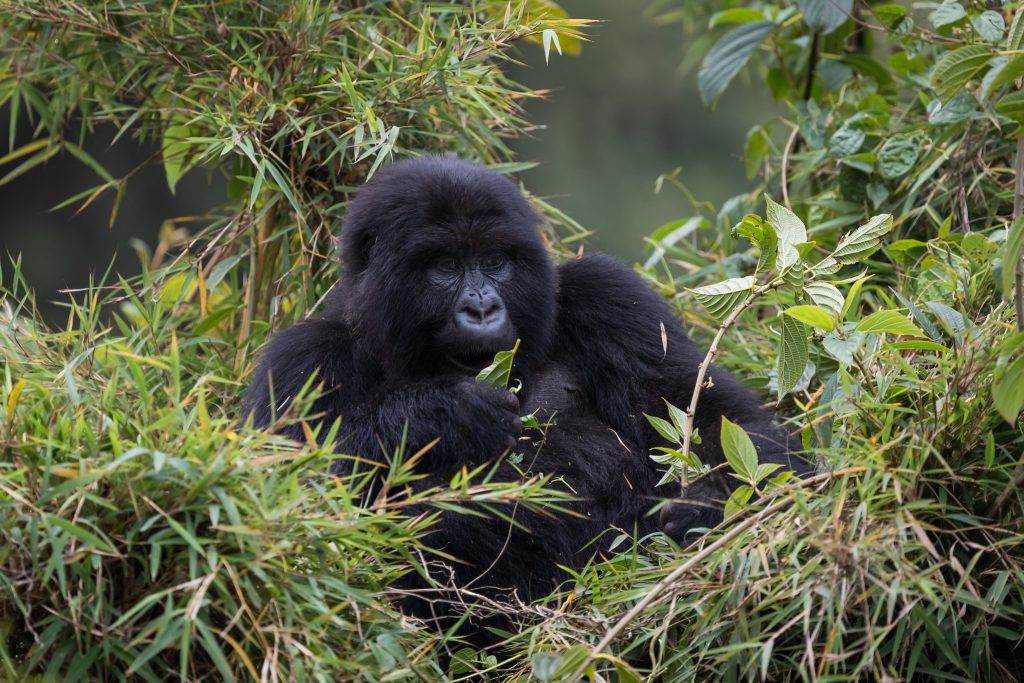
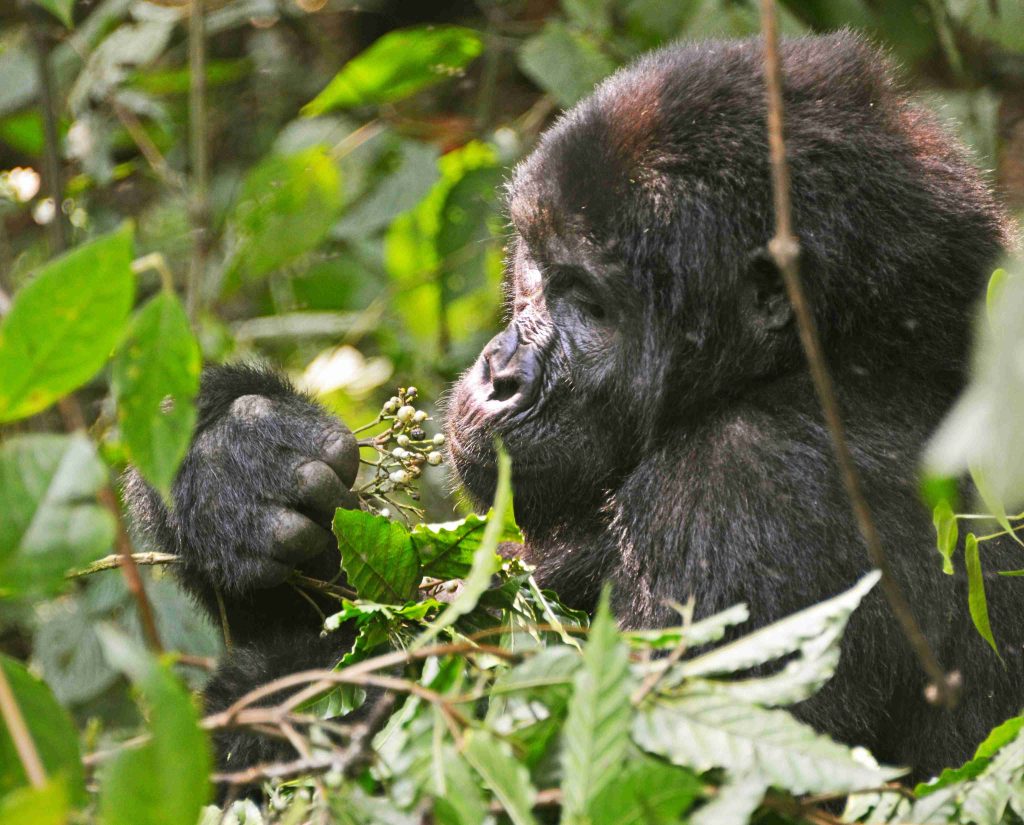
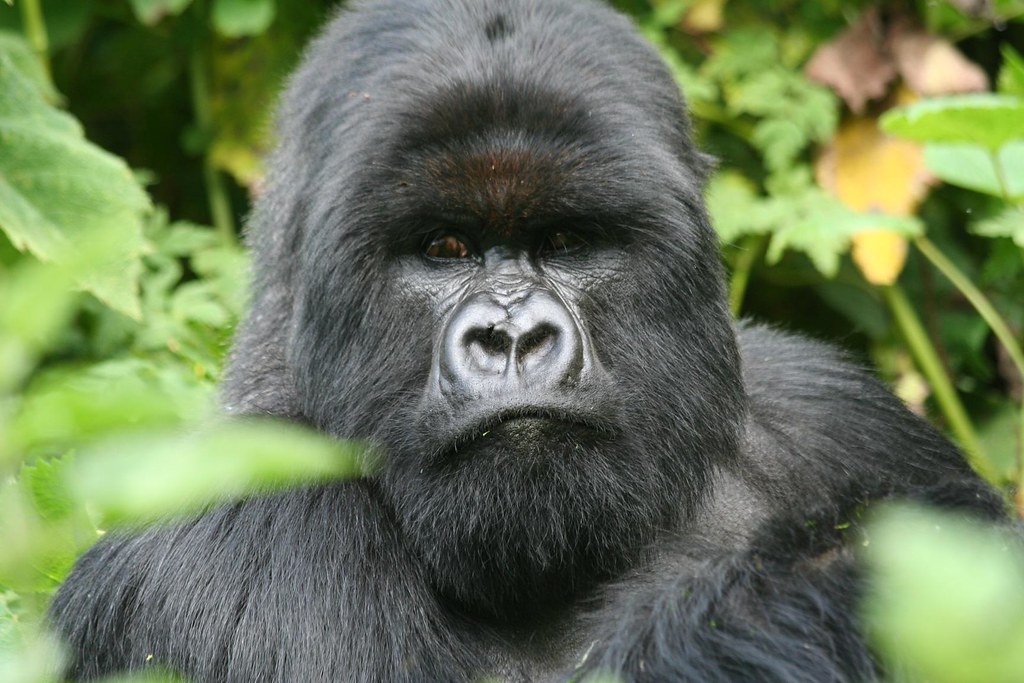
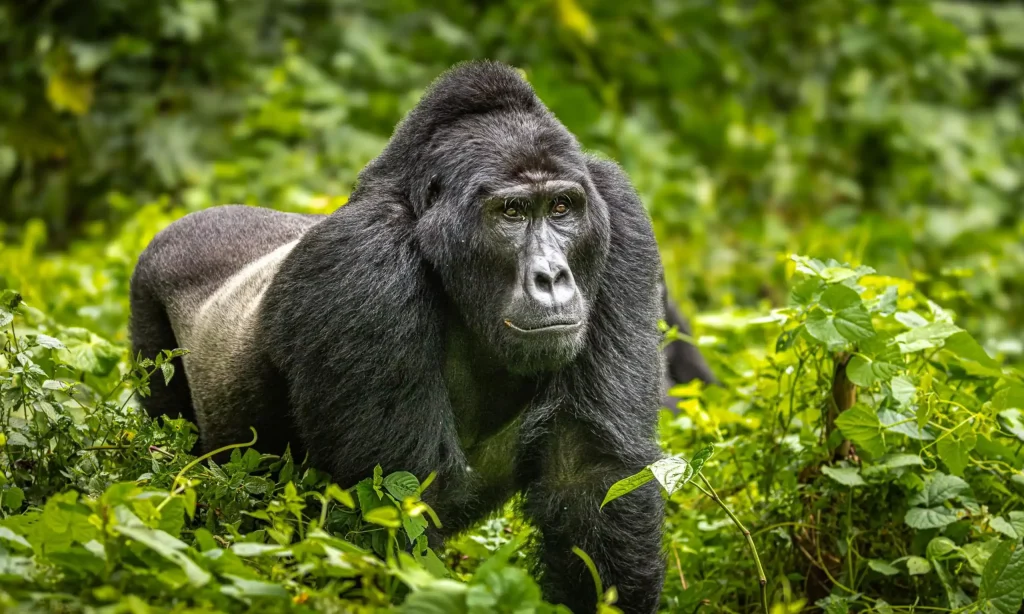
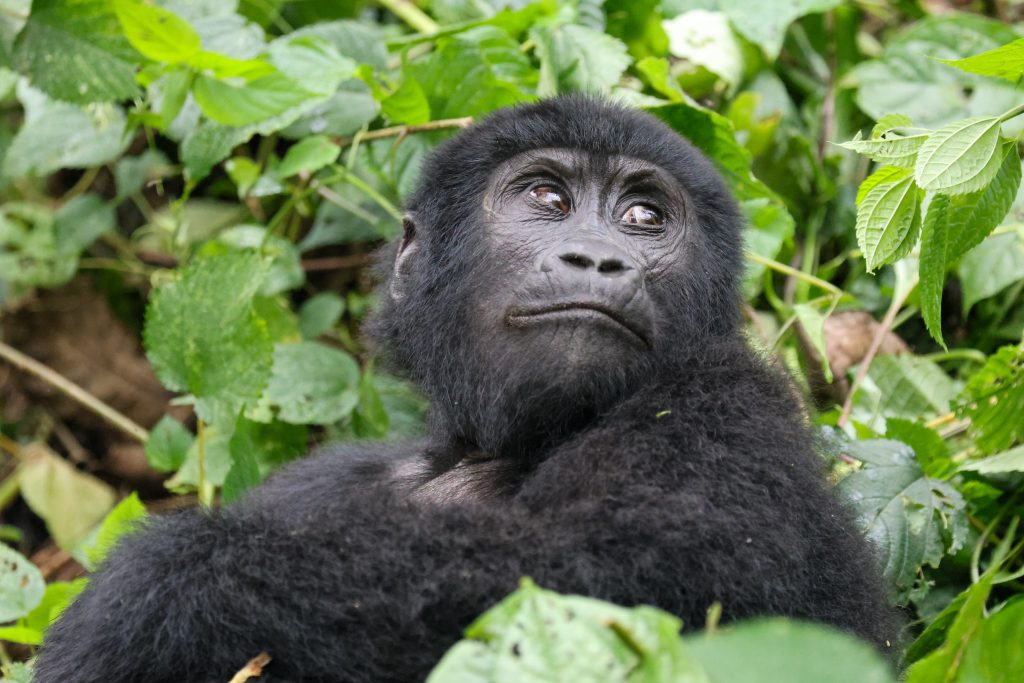
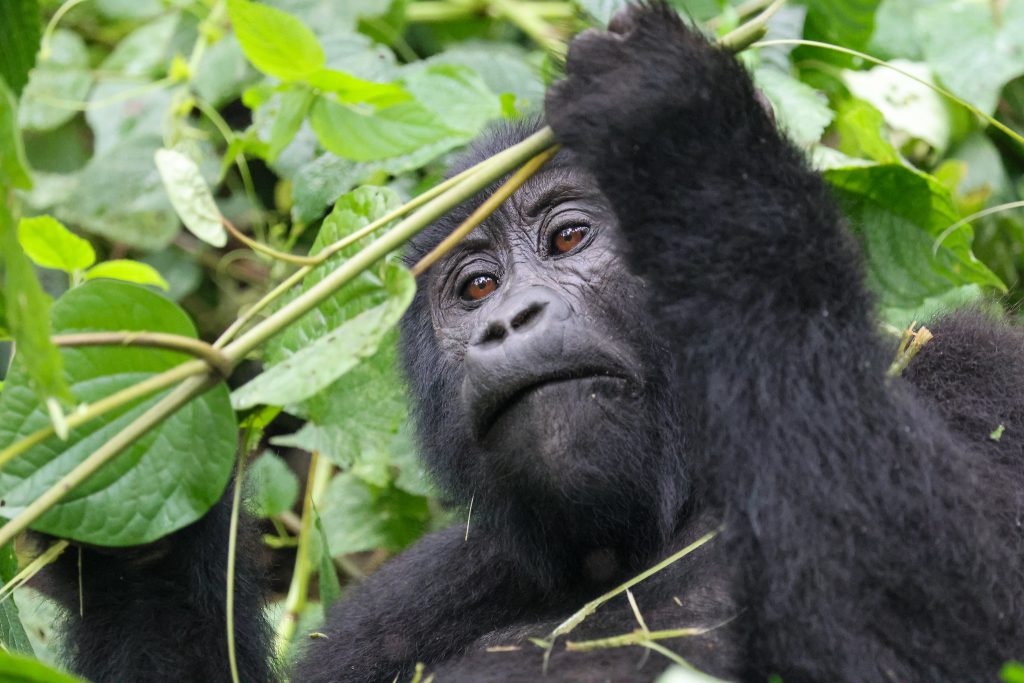
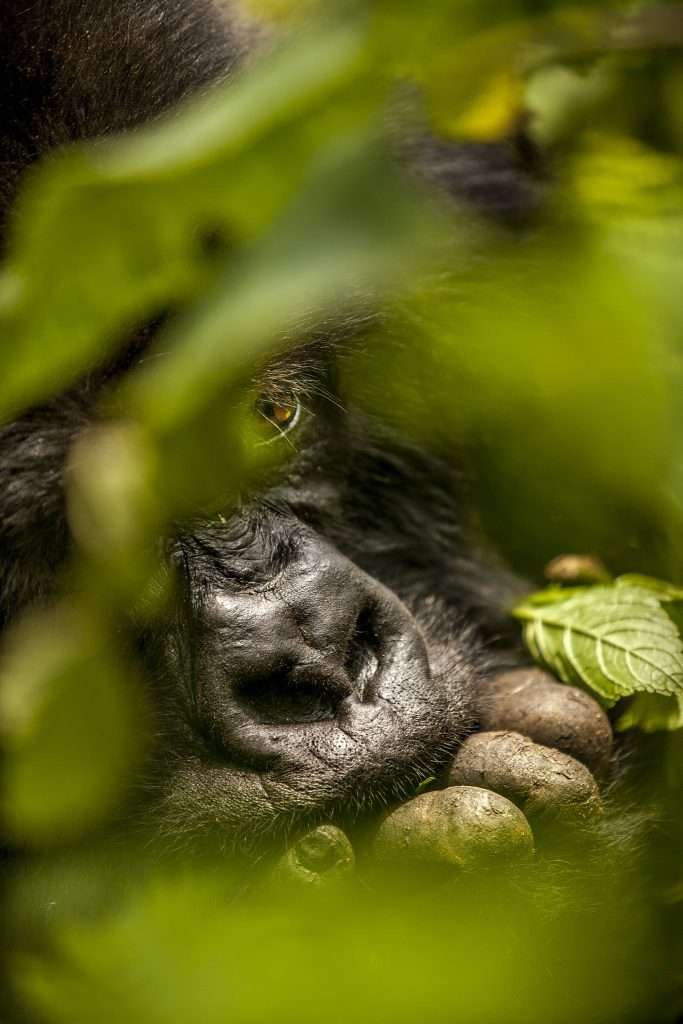
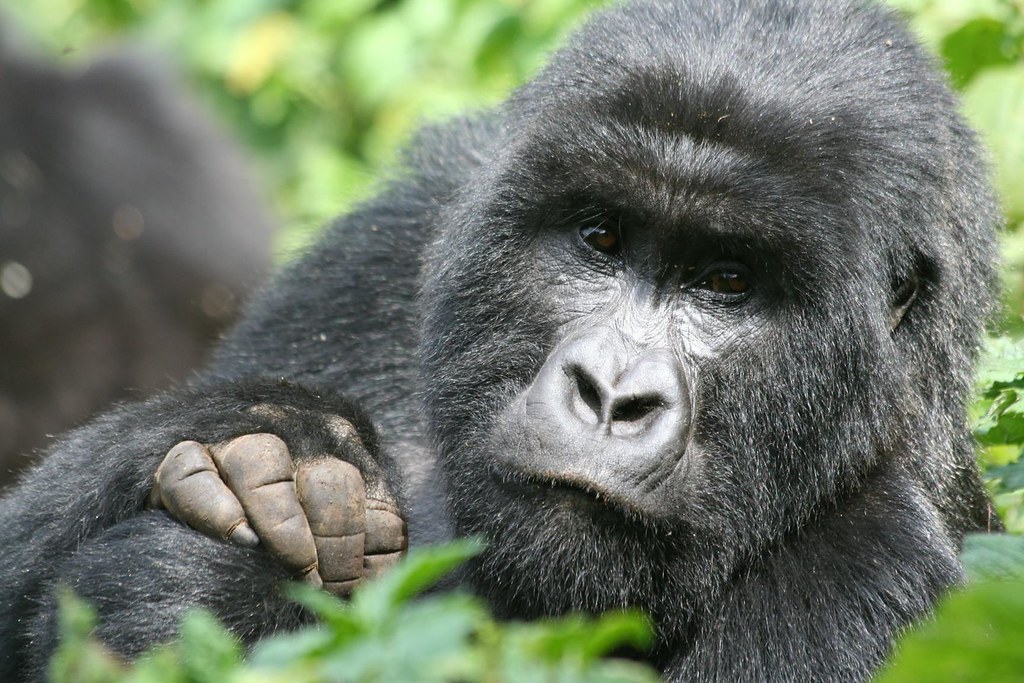
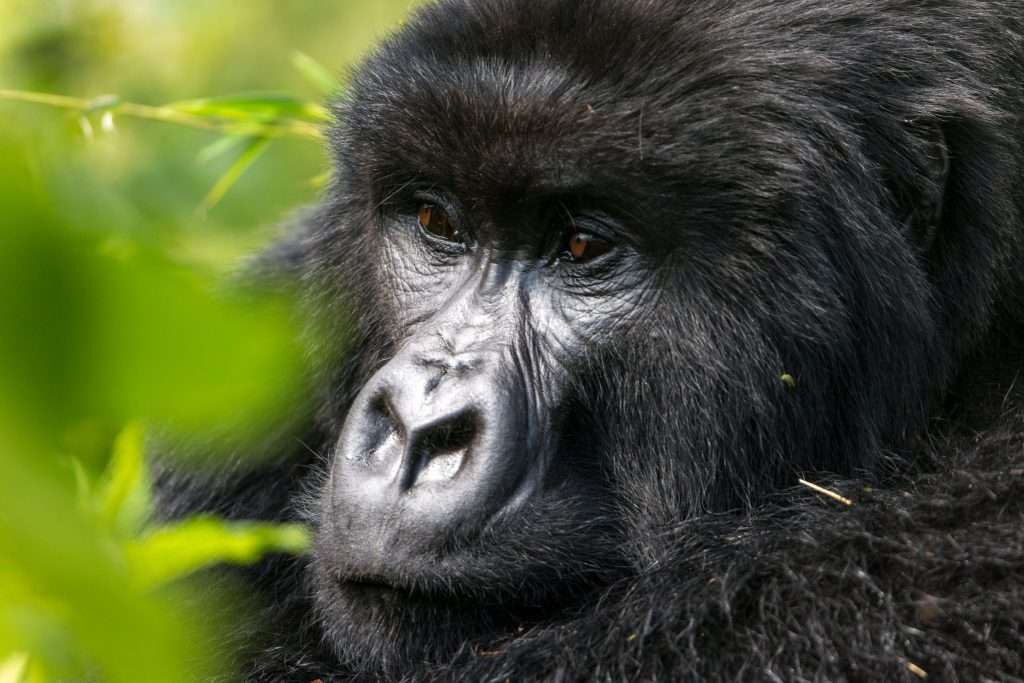
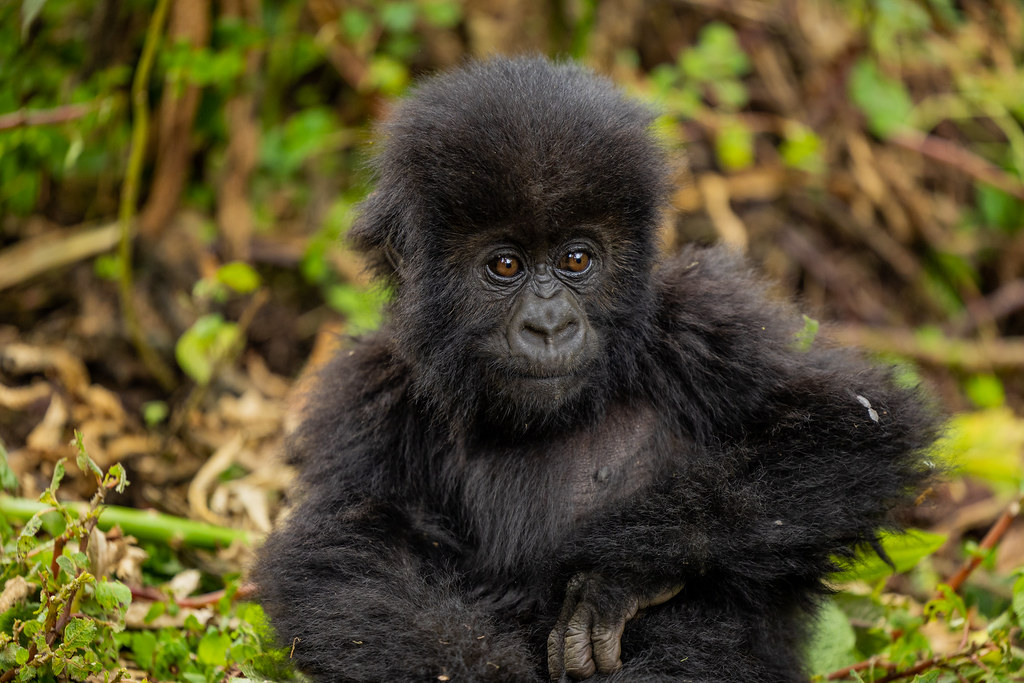
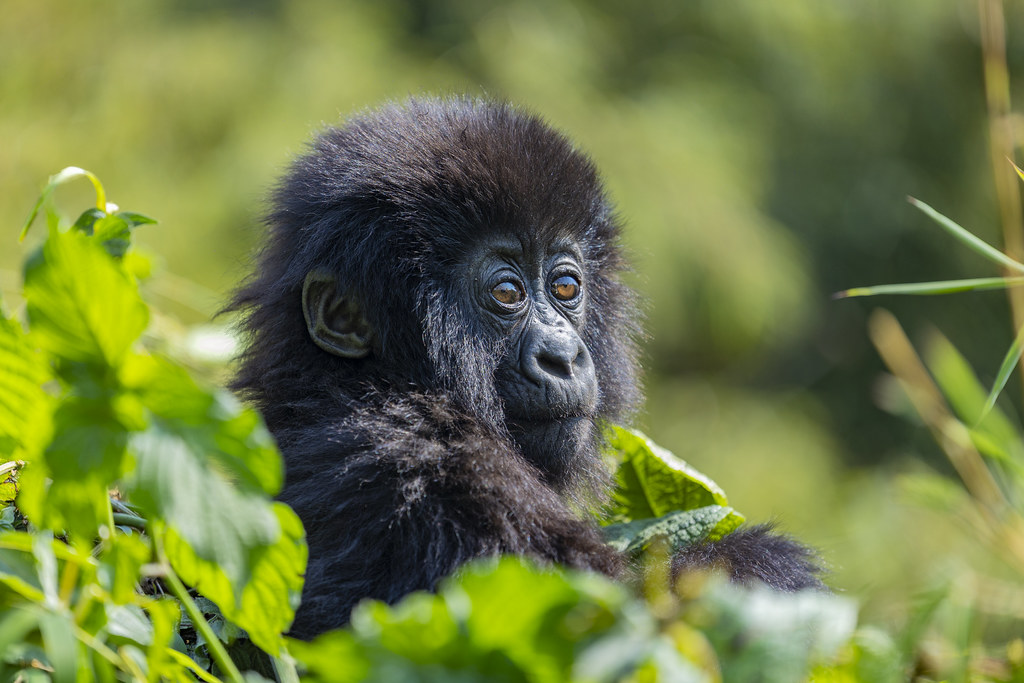
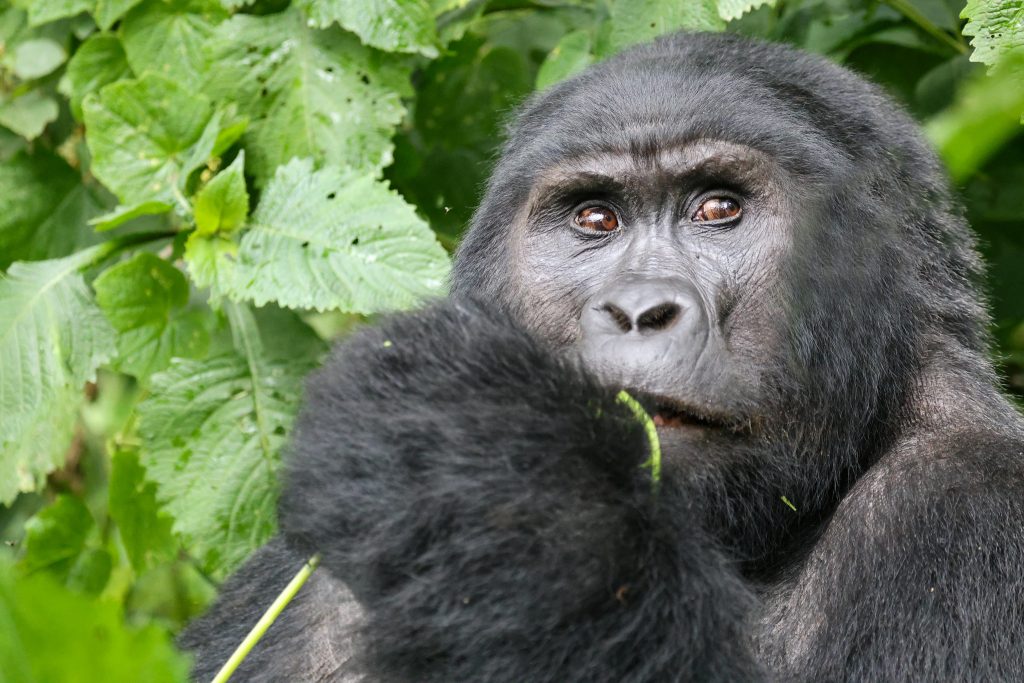
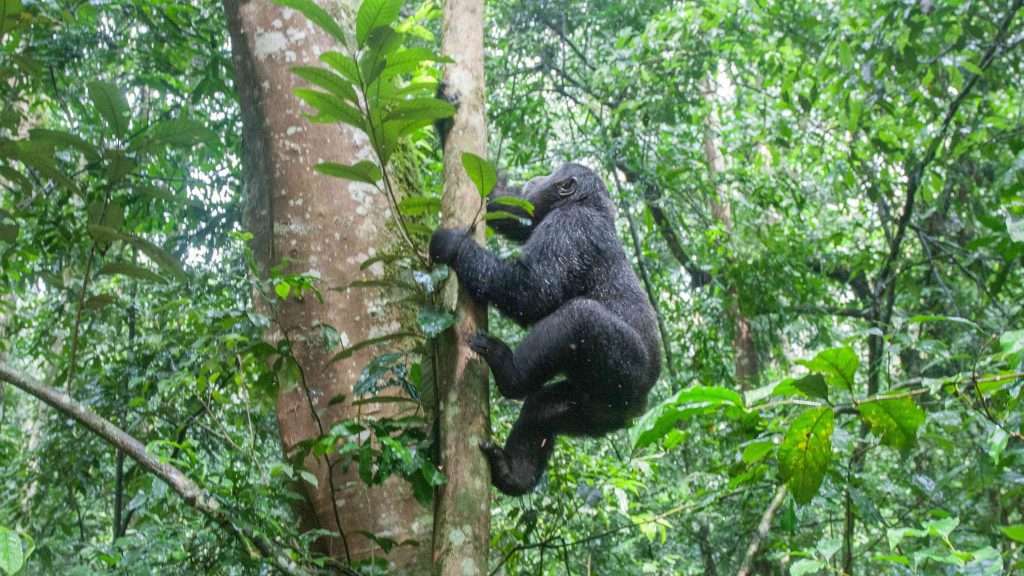
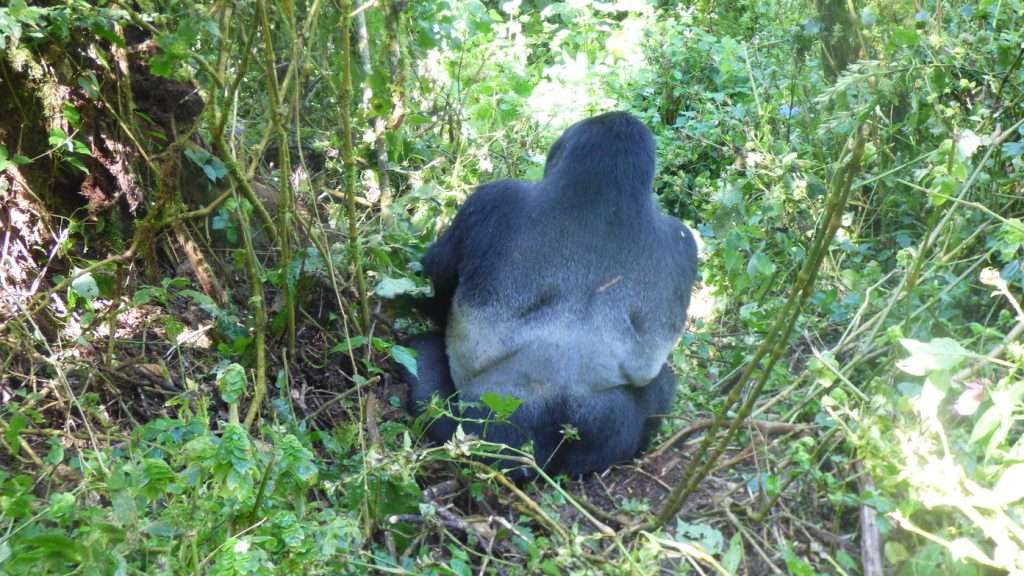
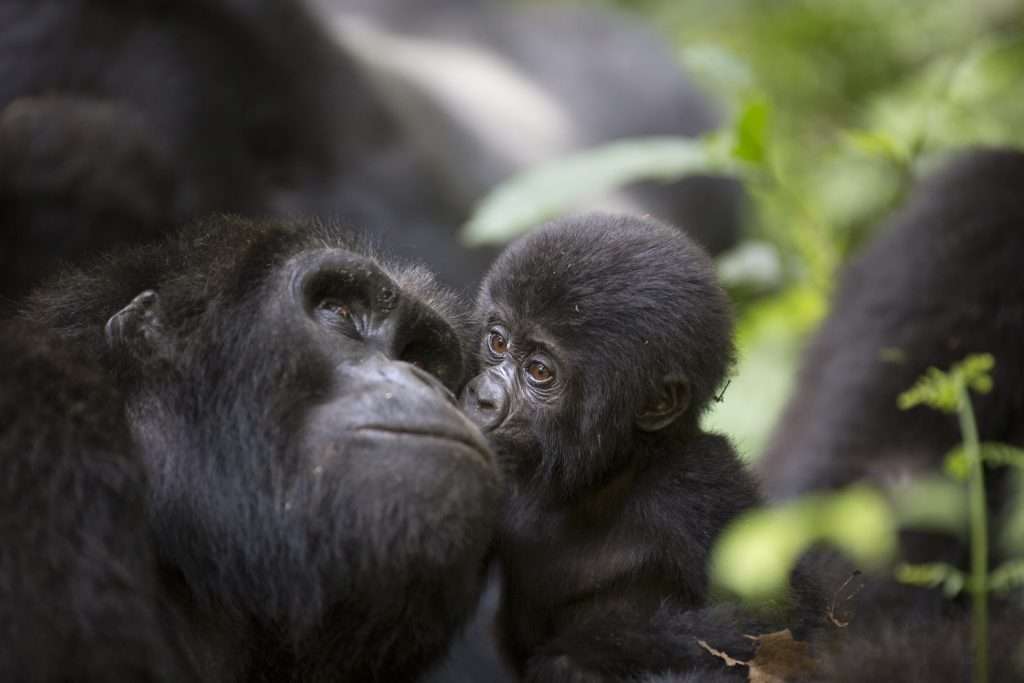
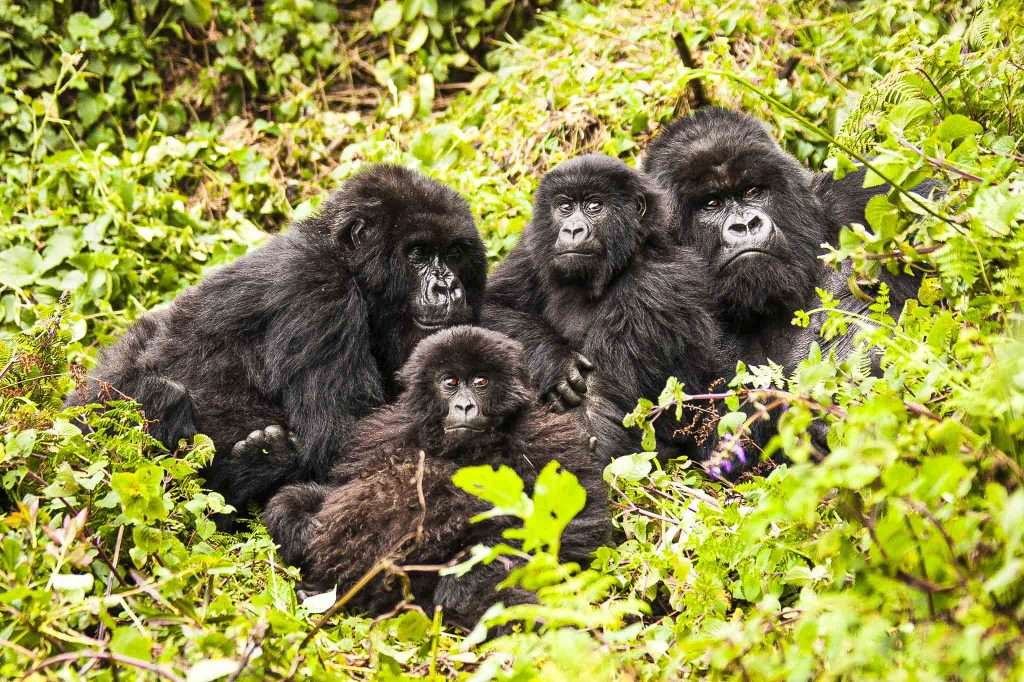
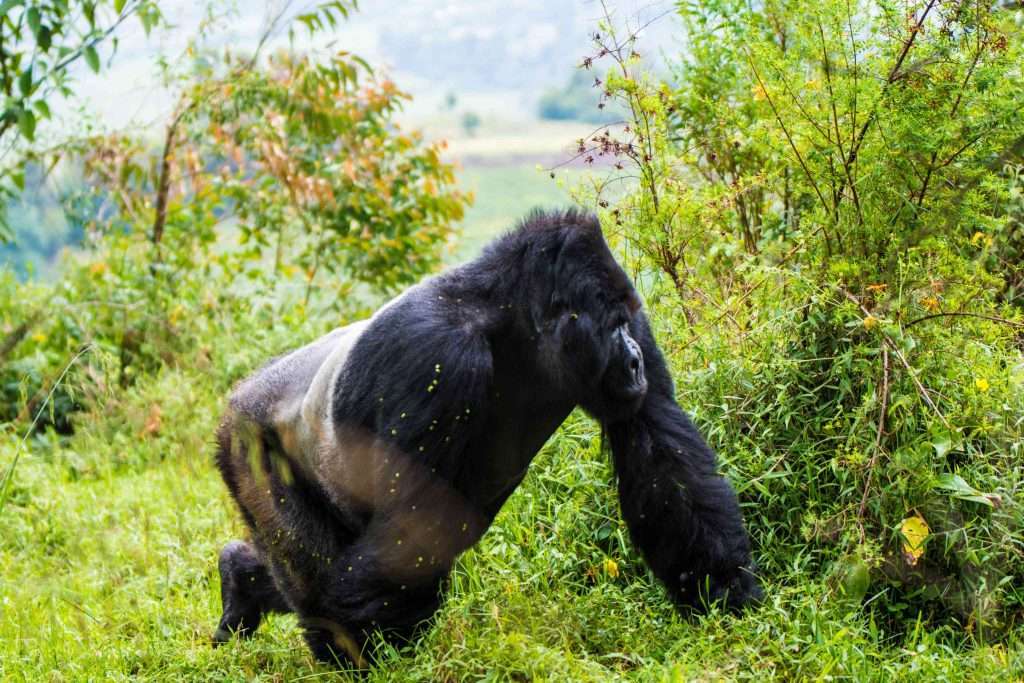
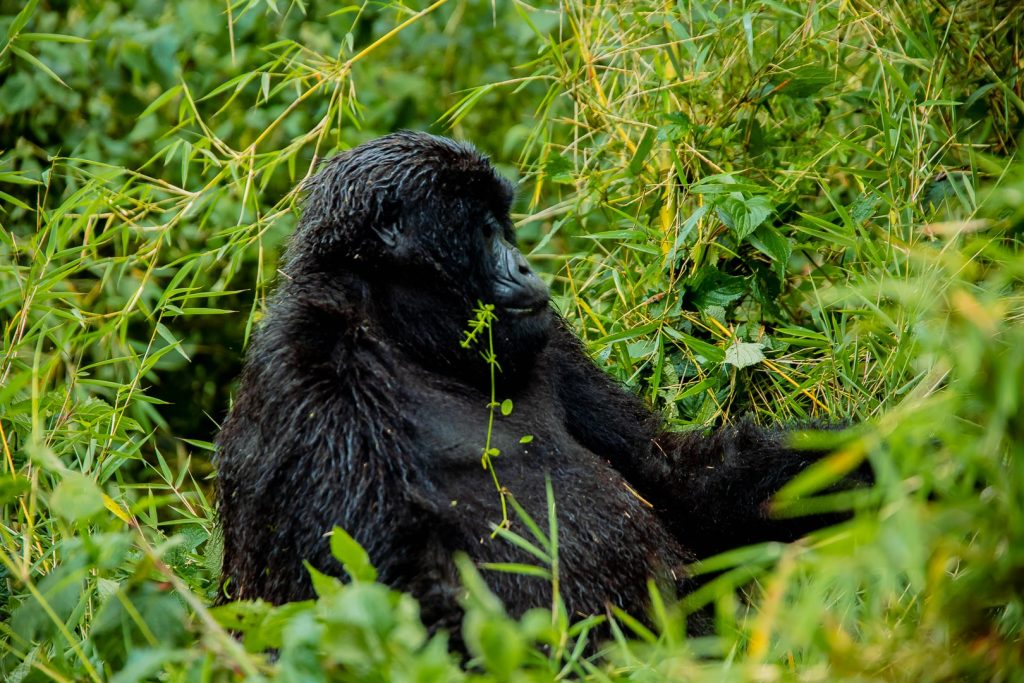
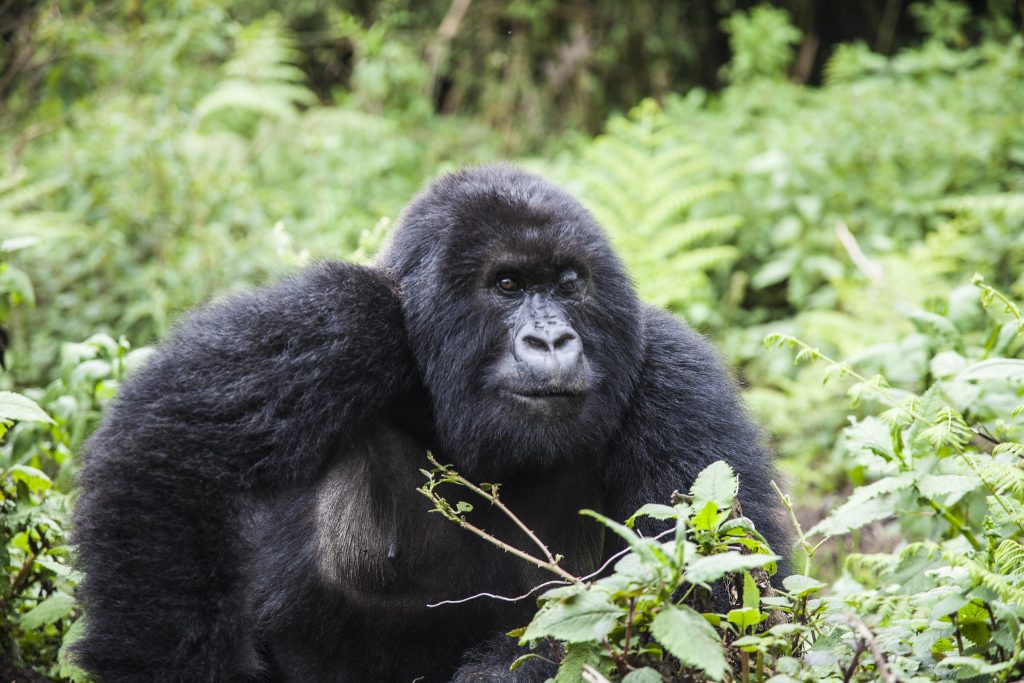
Volcanoes National Park hosts over 13 habituated gorilla families. These gorilla families are available for trekking every day. The nature of mountain gorillas as social animals makes them uniquely adaptive to a group called a gorilla family. The gorilla family as a whole unit is headed by a male gorilla called a silverback. The gorilla families can accommodate up to 30 members or more, depending on the capacity of the head silverback to defend the family. There can be more than one silverback in a gorilla family. However, the head or lead silverback is one, and he is in charge of defending the family and also mating with the females for reproduction.
The primates’ close resemblance to humans is attributed to their DNA of over 98% similar to humans. This is additionally demonstrated in their social life of staying in a gorilla family headed by a silverback gorilla. Most of the gorilla families in Volcanoes National Park were habituated long ago, with some habituated by Dian Fossey and her team. The gorilla families in this park have been steadily multiplying. This is because some family members, when they mature their break off from their initial family to form their own. This is in a case where the one-time blackbacks mature to silverbacks and wish to have their own families.
This fuels fights between the mature silverback and the head silverback, and when defeated, the silverback sometimes breaks off with some females to start their own family. These natural occurrences have been the reason for the merging of new gorilla families. Volcanoes National Park once had only 10 gorilla families, but with these fights, the families increased to 13. A gorilla family is very important for an individual gorilla, as it is assured of protection from intruders. The gorilla families in Volcanoes National Park include the following.
Susa A family
Susa A gorilla family is the most popular and oldest gorilla group in Volcanoes National Park. Its formation stretches put to the time of the great Dian Fossey when she was still living in the park. The habituation process of this gorilla family took over 3 years, with over 7 members living in this group by that time. As the years moved on, this family rose to over 42 members, and this led it to be one of the largest families to be formed. The Susa A gorilla family is believed to have been created in 1974, and since its formation, this family has gone through a transitional period. This is evident with the formation of other families from this family. This family is headed by the alpha male silverback called Kurira.
Karisimbi family (Susa B)
Large numbers are always hard to control and manage, and this is why Susa A gorilla family, broke up. As its members grew to 42, the alpha silverback was overwhelmed and thus broke into smaller families. This is how this Karisimbi gorilla family, or Susa B, was formed. This family gets its name from the Karisimbi Mountain, located in the park where this family is found. This family nests around the steep slopes of the tallest mountain in the park, making it hard to trek.
Kwitonda family
Formed in 2004, the Kwitonda gorilla family is commonly trekked in Volcanoes National Park. At the time of its formation, this family was in the Democratic Republic of Congo, but later migrated into Rwanda’s Volcanoes National Park. It’s crossing into Rwanda from Congo was thought to be a short visit, by fast forward, the family settled permanently. Kwitonda, the dominant silverback, which had come with the family from Congo, died later due to old age. Its death left the family in the leadership of the two younger silverbacks, Akarevuro and Kigoma. At this time, the family had 40 members. In a rare peaceful agreement, Akarevuro and Kigoma split the family into two gorilla families of 20 members each, and each silverback went with one group.
Ugenda family
The Ugenda gorilla family is also another family permanent to Volcanoes National Park. This family’s nature of always shifting from territories in the park led to its name ‘ugenda’. This Kinyarwanda word means moving or on the move. This family inhabits the slopes of Karisimbi Mountain but always relocates, making them can be a bit hard to trek.
Umubano family
The Umubano gorilla family is headed by the dominant silverback Charles, comprised of 12 members. Formed as a result of splitting from the Amahoro family after Charles fought with Ubumwe, the silverback of the large family of Amahoro, before splitting. Following Charles’ defeat, he walked away with some females to start his family. Incredibly, years after this split, these two families can be spotted living close to each other with no rivalry. Thus, the name Umubano, meaning neighbour, was adopted.
Amahoro family
Ubumwe, a dominant silverback, heads this Amahoro gorilla family. Living on the steep slopes of Mount Bisoke, the Amahoro gorilla family consists of 12 members. Amahoro, meaning peace, symbolizes the nature of this family peacefully living close to its neighboring family Umubano family.
Hirwa family
Hirwa, meaning the lucky one, is a gorilla family located along the slopes of Mount Sabyinyo. It was once led by a dominant silverback called Munyinya. This family had 13 members by the time of its formation after breaking from the Sabyinyo family. The Hirwa gorilla family crossed to Uganda’s Mgahinga National Park, where it lost some members after they were struck by lightning. Upon returning to Rwanda, this family was led by Uburunga, the silverback.
Sabyinyo family
The slopes of Mount Sabyinyo serve as the perfect spot for harboring this gorilla family. This is where the Sabyinyo gorilla family gets its name from. This family once had 17 members that were led by Guhonda, the silverback. However, this silverback left the group in the hands of his son Gihishwamwotsi. This family stages at the edge of the park, often seen crossing to communities and also to the lower bamboo plantations.
Agashya family
The Agashya gorilla family is one of the oldest families in the park, formed in the 1980s. It is also referred to as Group 13 since it had 13 members at the time of its formation. Nyakarima was the dominant silverback then, but lost this title to a rival male, Agashya. This silverback took time watching Nyakarima and studying his moves before later striking. Agashya defeated Nyakarima and then moved with the family to higher ground to avoid being tracked by Nyakarima. Agashya gorilla family has since increased to 20 members after the silverback welcomed lone females to the group.
Bwenge family
The Bwenge family is prominent in Volcanoes National Park, with 7 members. Bwenge means wisdom, and this family was named so following the dominant silverback Bwenge. Interesting about this group is that when the silverback Bwenge died in 2014, there were no other mature males, thus, the female Maggie took over the leadership of the family.
Isimbi family
With over 13 members, the Isimbi gorilla family was formed from the Karisimbi gorilla family after splitting. Getty, the silverback, was the dominant silverback at the time of its formation. However, after its death, Muturengere took over, although it was of a young age, but helped by the older female Poppy.
Muhoza family
The Muhoza gorilla family comprises about 19 members and is named after the dominant silverback Muhoza. It is one of the newly formed gorilla families in Volcanoes National Park. At the time of its formation, it had 7 members, but increased due to raids of females from the silverback in other families, like Hirwa and Kwitonda.
Noheli family
This Noheli gorilla family is the newly formed gorilla family in Volcanoes National Park. This family has over 7 members, but by the time of its formation, it had only 3 members. The lone silverback Noheli was joined by two females from the Isimbi and Susa gorilla families, thus starting a family.
The park encompasses five of the eight Virunga volcanic peaks, creating a dramatic backdrop for your adventure:
-
Mount Karisimbi: Rwanda’s highest peak at 4,507M
-
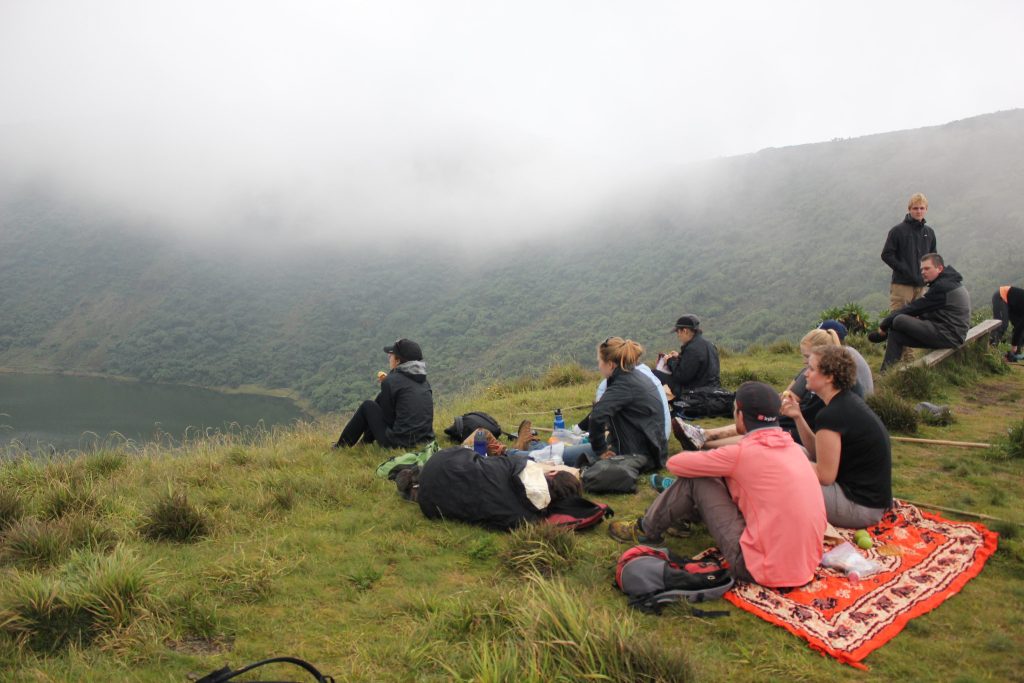
Mount Bisoke: Famous for the beautiful crater lake at its 3,711M summit.
-
Mount Sabyinyo, Gahinga, and Muhabura: Towering peaks that form the border between Rwanda, Uganda, and the DRC.
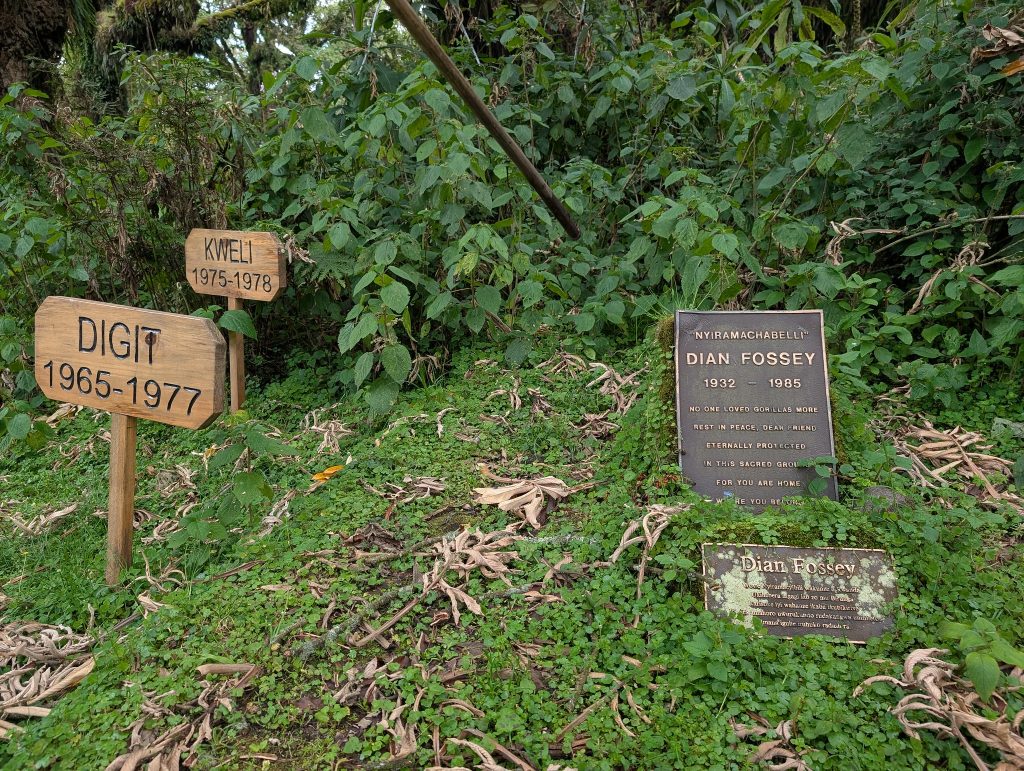
This high-altitude terrain is where the legendary Dian Fossey conducted her groundbreaking research. Today, visitors can still hike to her tomb and the remains of the Karisoke Research Center, a poignant tribute to the woman who saved the mountain gorillas from extinction.