
Bwindi Impenetrable National Park is more than a rainforest, it is a living world, thick with mist, mystery, and the quiet pulse of untamed life. Nestled in the southwestern corner of Uganda, along the edge of the Albertine Rift Valley, this ancient afromontane forest feels like stepping into another era. Towering trees, tangled vines, and dense undergrowth stretch in every direction, creating a landscape that is as challenging as it is beautiful. The park’s name, “Bwindi,” means “darkness” or “impenetrable” in the local Lukiga language, a name that perfectly captures its dense, shadowy canopy.
Declared a UNESCO World Heritage Site, Bwindi shelters one of the most remarkable concentrations of biodiversity in Africa. Over 324 tree species grow here, including ten that are found nowhere else in Uganda. The forest is home to more than 120 mammal species, from elusive forest elephants to a variety of primates, and its branches are alive with the calls of around 348 bird species. Butterflies flit through the clearings, and the air is rich with the scent of damp earth and green leaves. Every step through Bwindi feels like a discovery, not just of wildlife, but of time itself.
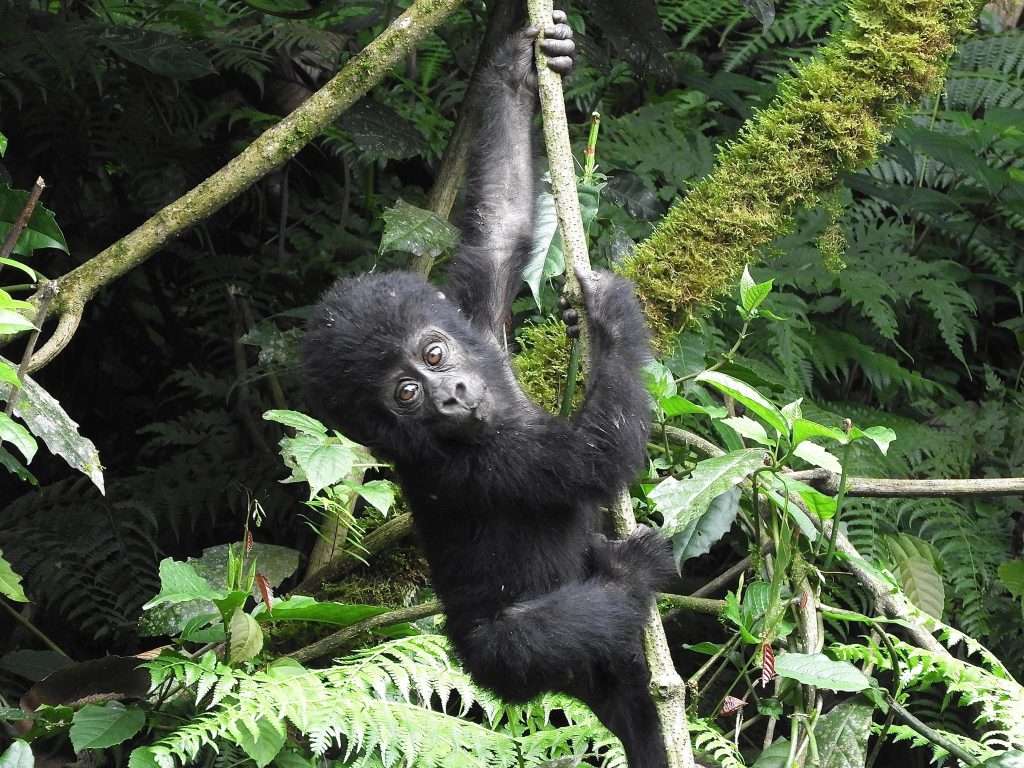
Walking Into the Heart of the Forest
Entering Bwindi is like stepping into a story older than memory. The paths wind through towering trees draped in moss, with ferns and creepers closing in around you. The ground is soft underfoot, padded with centuries of fallen leaves, and the air feels cooler and heavier than outside the forest. Mist often clings to the higher slopes, turning the treetops into ghostly shapes against the sky.
The park spans about 327 square kilometers of rugged terrain, rising from deep, slippery valleys to steep ridges and high hills. The landscape is carved by the Rift Valley’s ancient forces, and the forest sits like a green blanket over its folds. Though the word “impenetrable” can be a warning, it is also an invitation—an invitation to slow down, to listen closely, and to let the forest reveal itself in small, quiet moments.
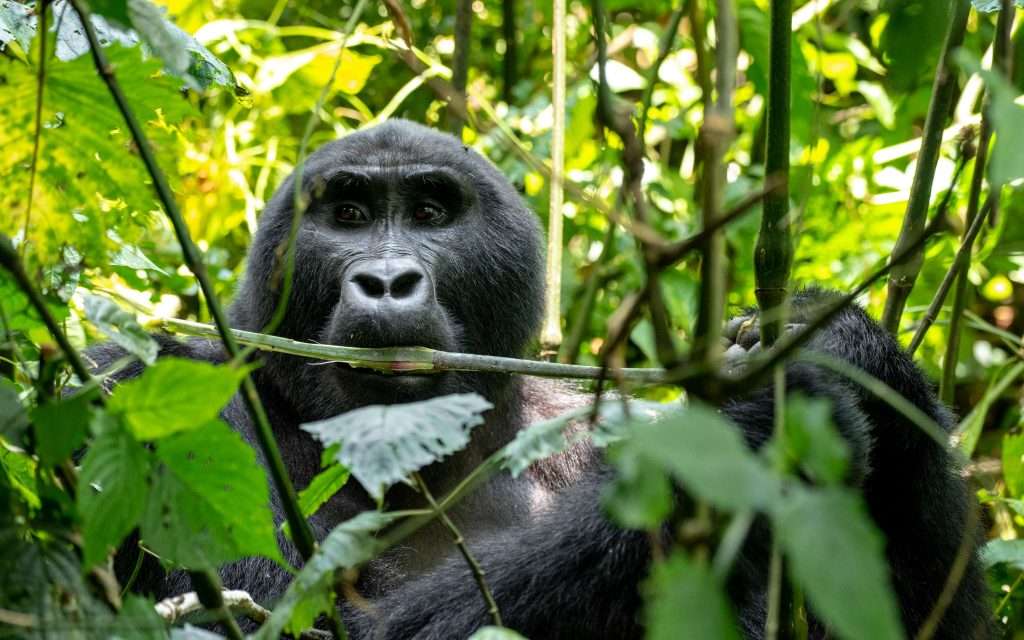
The Mountain Gorillas of Bwindi
At the heart of Bwindi’s story is the mountain gorilla. This park is home to more than 300 of these magnificent primates, about half of the entire world population. To stand face to face with a silverback in the misty forest is to feel both awe and humility, as though you are witnessing something rare and fragile that demands respect.
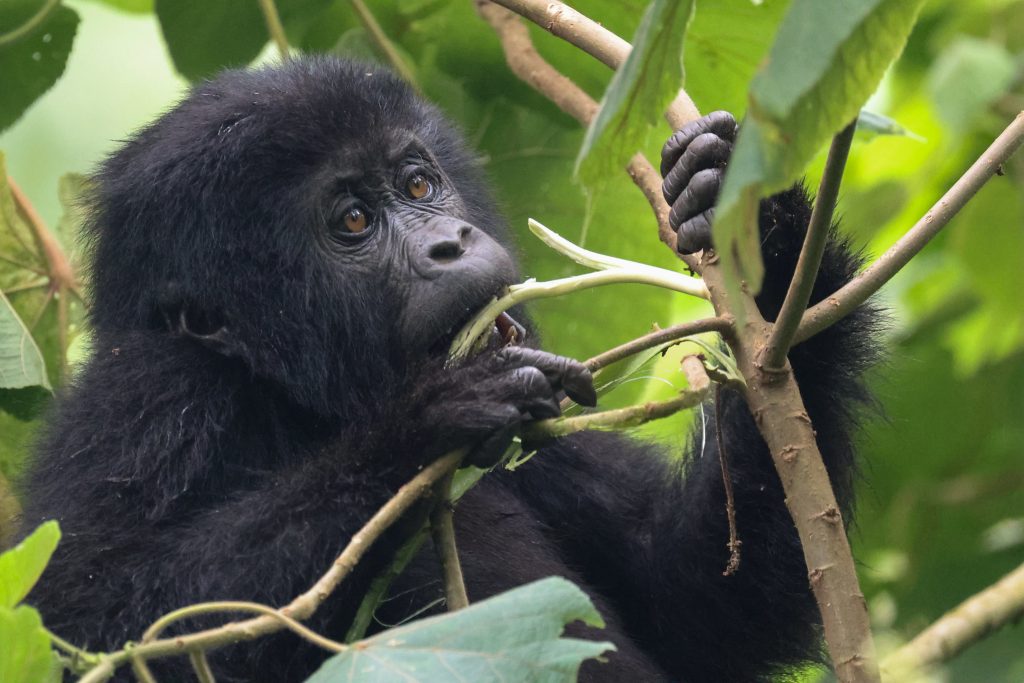
Several habituated gorilla families live in Bwindi, each with its own character and story. The Mubare group, with 16 gorillas led by a single dominant silverback, was one of the first made available for tourism. The Habinyanja group, larger at 23 gorillas, often surprises visitors with curious juveniles and playful interactions. The Rushegura group, smaller and more compact, offers an intimate experience, while the Nkuringo group, with 20 gorillas and two silverbacks, moves through stunning, open landscapes with sweeping views.
Trekking to find a gorilla family is hard work. Trails climb steep slopes, twist through thick vegetation, and sometimes vanish under mud and rain. Yet when the forest suddenly opens and you see a group sitting quietly in the clearing, everything else fades away. Guides limit visits to one hour and only allow eight people per group each day, so that the gorillas remain wild and undisturbed. Proper clothing, strong boots, and a willingness to push through the physical challenge are essential for this once‑in‑a‑lifetime experience.
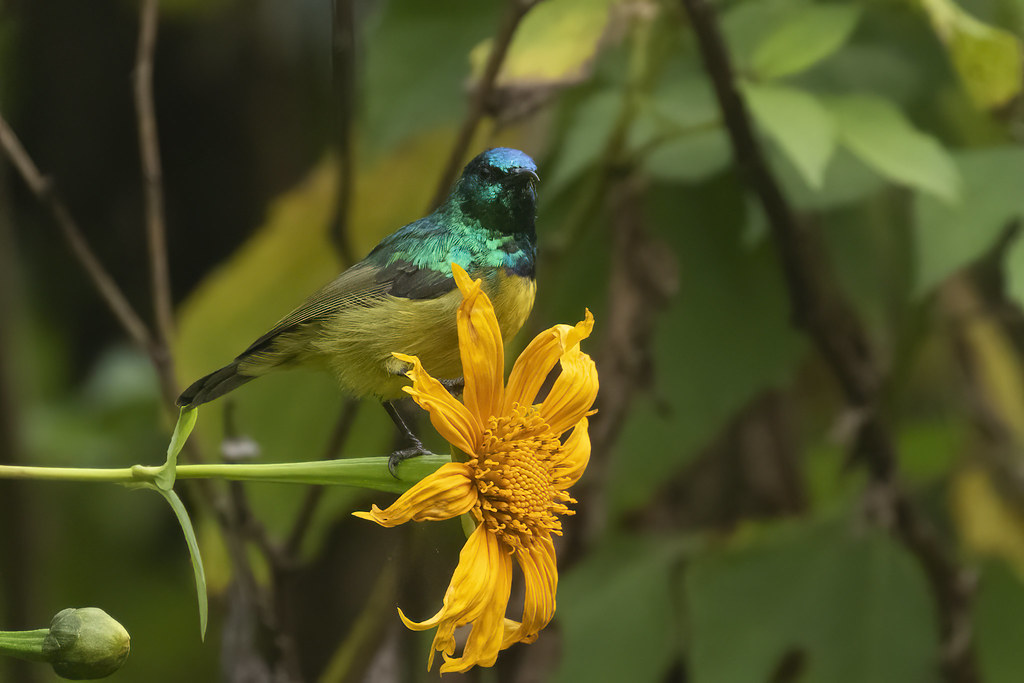
Bird Watching In Bwindi National Park
Voices of the Forest – Bird Watching in Bwindi
Beyond the gorillas, Bwindi is a paradise for bird lovers. The forest echoes with a chorus of calls, from soft whistles to sharp, piercing notes. Early mornings in sectors like Ruhija and Buhoma are especially magical, when sunlight filters through the canopy and the birds fill the air with color and song.
The park hosts around 348 bird species, with a remarkable number belonging to the Albertine Rift endemics. Finding these rare birds—often glimpsed briefly as they flit among branches—is part of what makes Bwindi so special. Bird watchers may spot the Short‑tailed Warbler, the Rusty‑faced Woodland Warbler, the Bar‑tailed Trogon, Grauer’s Rush Warbler, Wilcock’s Honeyguide, the Yellow‑eyed Black Flycatcher, the Kivu Ground Thrush, the Dusky Crimsonwing, and the White‑tailed Blue Monarch. On a good morning, a single outing can yield over a hundred species, turning a quiet walk into a living checklist of African birds.
For many travelers, a day of birding in Bwindi feels like moving through a gallery of nature’s finest art, where every turn of the path reveals a new color, a new shape, a new sound.
Hiking the Trails and Waterfalls
Bwindi rewards those who stay more than a single day with a network of guided nature walks and hiking trails. These trails reveal the forest from different angles, offering glimpses of waterfalls, valleys, and distant mountains.
The Munyanga River Trail leads to a series of three waterfalls, where the air is cool and misty and light sparkles on wet rocks. Ferns and orchids line the path, and butterflies dance in the small clearings. The Rushura Hill Trail climbs higher, opening onto sweeping views of the Western Rift Valley, Lake Edward, and sometimes even the snow‑capped peaks of the Rwenzori Mountains on clear days.
For a more demanding adventure, the Muzabajiro Trail winds up steep slopes to a summit with panoramic views of Bwindi, the Virunga volcanoes, and the Rift Valley itself. This is a favorite route for a scenic picnic, where the forest stretches below like a green sea. The Ruizi River Trail, one of the longest in the park, takes a full day to complete and is especially popular with bird watchers and nature lovers who enjoy long, slow walks through changing landscapes.
The Bamboo Trail passes through 14 different vegetation types, from dense undergrowth to open stands of bamboo, before ending with breathtaking views of Lake Bunyonyi and the Mafuga Forest. For those who prefer to travel by vehicle, scenic drives through the Ruhija area reveal the forest’s beauty without the need for long treks, offering glimpses of wildlife and ever‑changing views along the road.
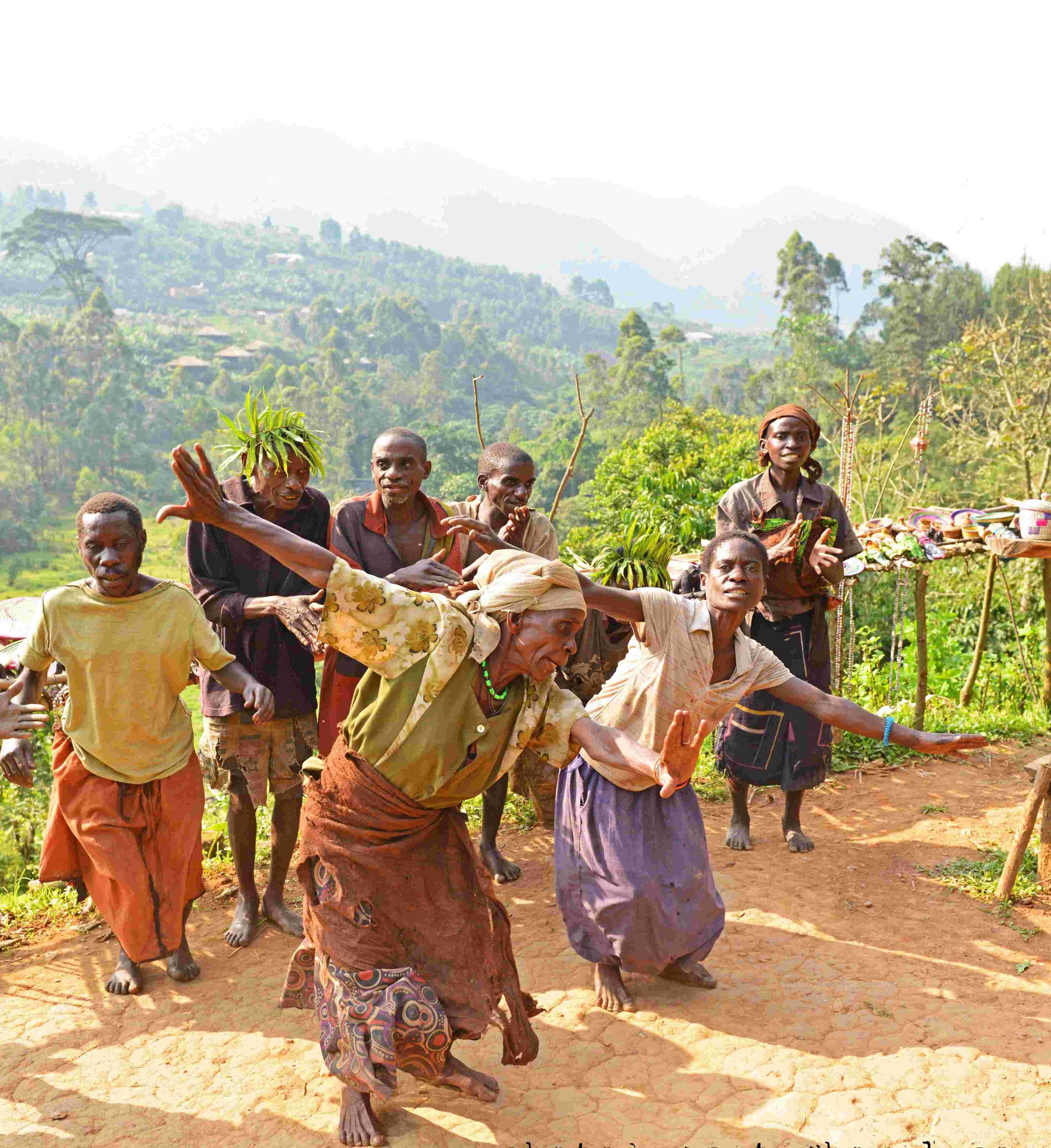
Meeting the People of Bwindi
Evenings in Bwindi are not only about resting after a long day in the forest. They are also a chance to connect with the people who live alongside the park. Communities of the Batwa, Bakiga, and other local groups share their stories, songs, and traditions with visitors who stay in nearby villages like Nkuringo and Buhoma.
Cultural performances bring the forest’s human history to life. Women’s groups dance and sing, telling stories of life in the hills, of farming, of traditions tied to the land. Workshops and guided village walks allow visitors to learn about local crafts, cooking, and daily life. These experiences are not only educational—they also provide direct support to families living near the park, blending tourism with conservation and community well‑being.
Where to Stay in the Forest
Bwindi offers a range of places to rest, from simple bandas to cozy lodges and even luxury tented camps. Many visitors choose to stay near the main entry points: Buhoma, Nkuringo, Ruhija, and Kihihi. Buhoma, close to the park headquarters, is a popular base for gorilla trekking and bird watching. Nkuringo offers a quieter, more intimate experience, often favored by those seeking a slower pace. Ruhija, higher in the hills, is ideal for birders and trekkers who want to be as close as possible to the forest edge.
Lodges and camps typically serve a mix of traditional Ugandan dishes and international cuisine, so after a long day of hiking or tracking gorillas, travelers can gather around a warm meal, share stories, and listen to the forest sounds drifting in from outside.

air transport to reach Bwindi Impenetrable National Park for a gorilla trekking tour in the dry season
The Road to Bwindi
Reaching Bwindi is part of the adventure. From Kampala, the journey to the town of Kabale covers hundreds of kilometers of paved road, usually taking six to seven hours by car or tour minibus. From Kabale, the road climbs into the hills, switching to rougher, red‑earth surfaces as it winds through Kanungu and toward the park’s main gate at Buhoma. This last stretch can take three to four hours in a 4WD vehicle, especially in the rainy season, as the terrain becomes steep and often muddy.
An alternative route leads from Kabale to the Ruhija sector, a shorter but still scenic drive that hugs the forest’s edge and offers views of hills and valleys along the way. Some travelers choose to fly into small airstrips near the park and then continue by road, cutting down the long drive. No matter how one arrives, the journey helps prepare the mind for what lies ahead—a world of dense green, ancient trees, and the quiet presence of mountain gorillas.
When to Visit and What to Bring
Bwindi’s climate is cool and wet, with temperatures ranging from about 7°C in the early morning to around 20°C during the day. The coldest months are usually June and July, and the park receives heavy rainfall, especially between March and May and again from September to November. Rain often falls as long, gentle drizzle rather than sudden storms, keeping the forest lush and green but sometimes turning paths into muddy streams.
Travelers should pack warm clothing, including a fleece or jacket, even in the daytime. A waterproof raincoat, sturdy hiking boots, and quick‑drying clothes are essential. A small backpack with water, snacks, insect repellent, and a basic first‑aid kit helps make the trek more comfortable. With the right preparation, even the wettest days in Bwindi become part of the experience, adding to the sense of adventure and immersion in the wild.
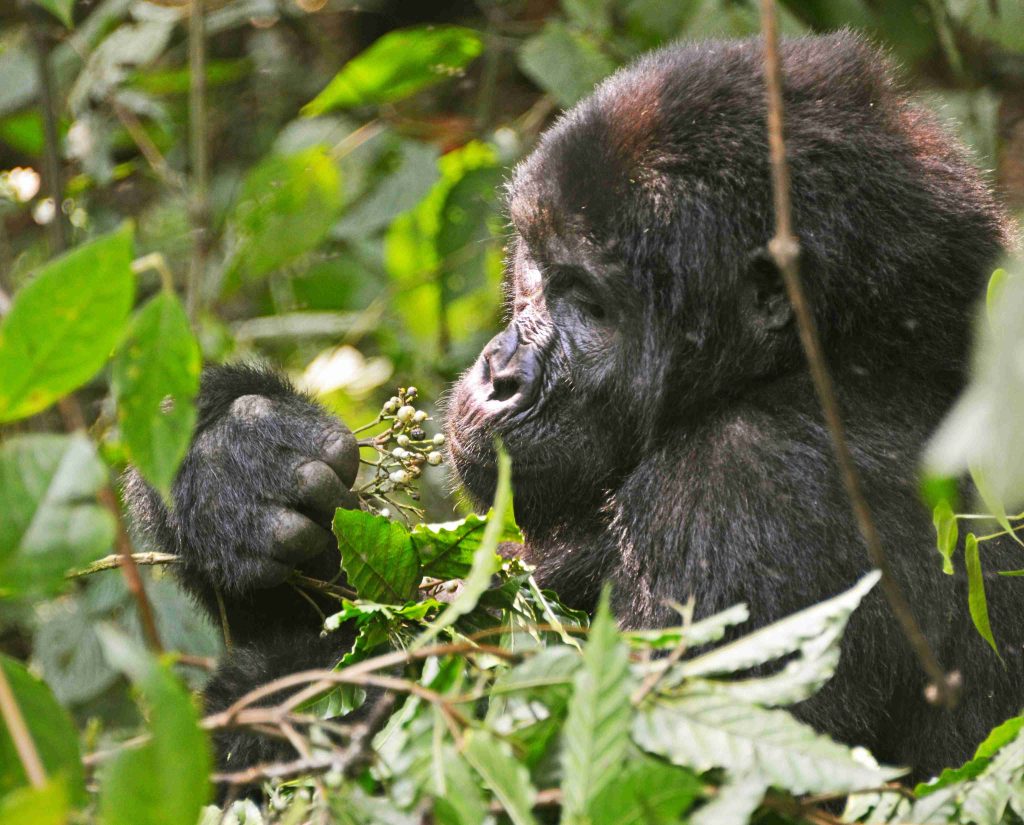
A Place Worth Protecting
Bwindi Impenetrable National Park is more than a destination—it is a reminder of what is possible when people and nature find a way to coexist. The mountain gorillas, the rare birds, the ancient trees, and the surrounding communities all play a part in its story. For those who come to walk its trails, track its gorillas, and listen to its birds, Bwindi becomes a place that lingers long after the journey ends: a forest of darkness, mystery, and quiet wonder, alive with the heartbeat of Africa.