Aberdares National Park: Kenya’s Misty Mountain Wilderness
Rising dramatically from the central highlands of Kenya, the Aberdares National Park is one of East Africa’s most distinctive and atmospherically beautiful safari destinations. Nestled within the Aberdare Mountain Ranges now officially renamed the Nyandaruas, though widely known by their colonial name, first given in 1884 by British explorer Joseph Thomson in honor of Lord Aberdare — the park sits on the eastern slopes of a mountain range whose peaks soar to 4,000 meters above sea level. The western slopes, adjacent to the Great Rift Valley, drop away steeply and dramatically, while the gentler, more contoured eastern slopes create the ideal conditions for a remarkably rich and diverse wildlife habitat.
Confirmed as a national park in 1950 just two years after Amboseli the Aberdares form part of Kenya’s celebrated family of great mountains, alongside Mount Kenya, Mount Meru, Mount Longonot, and Mount Elgon. It is a landscape of mist, forest, moorland, tumbling waterfalls, and crystal-clear trout rivers a world apart from the open savannah parks of the south, and all the more extraordinary for it.
The Landscape
The Aberdares are a park of two distinct worlds. The high moorlands sweeping, mist-draped, and otherworldly are home to three major peaks: Ol Doinyo Satima, the highest, anchoring the northern edge of the range; Kinangop in the south; and Kipipiri near the “Happy Valley” in the west. These high-altitude moorlands possess a haunting, elemental beauty open, windswept, and utterly unlike anywhere else in Kenya.
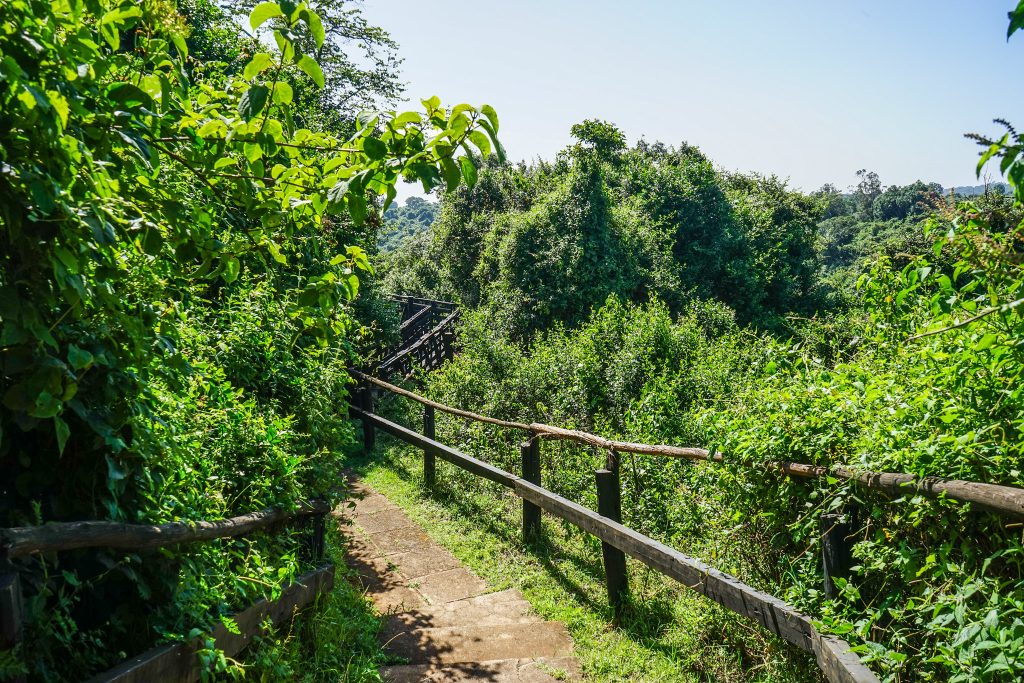
Below the moorlands lies the Salient a dense, richly forested zone of lower altitude that is the heart of the park’s wildlife habitat and home to the world-famous Treetops and The Ark lodges, where guests spend the night in elevated tree houses overlooking floodlit waterholes, watching animals emerge from the forest in the darkness. It was at Treetops, in February 1952, that Princess Elizabeth received the news of her father’s death and became Queen of England one of the most extraordinary moments in modern history, witnessed in the shadow of these ancient African forests.
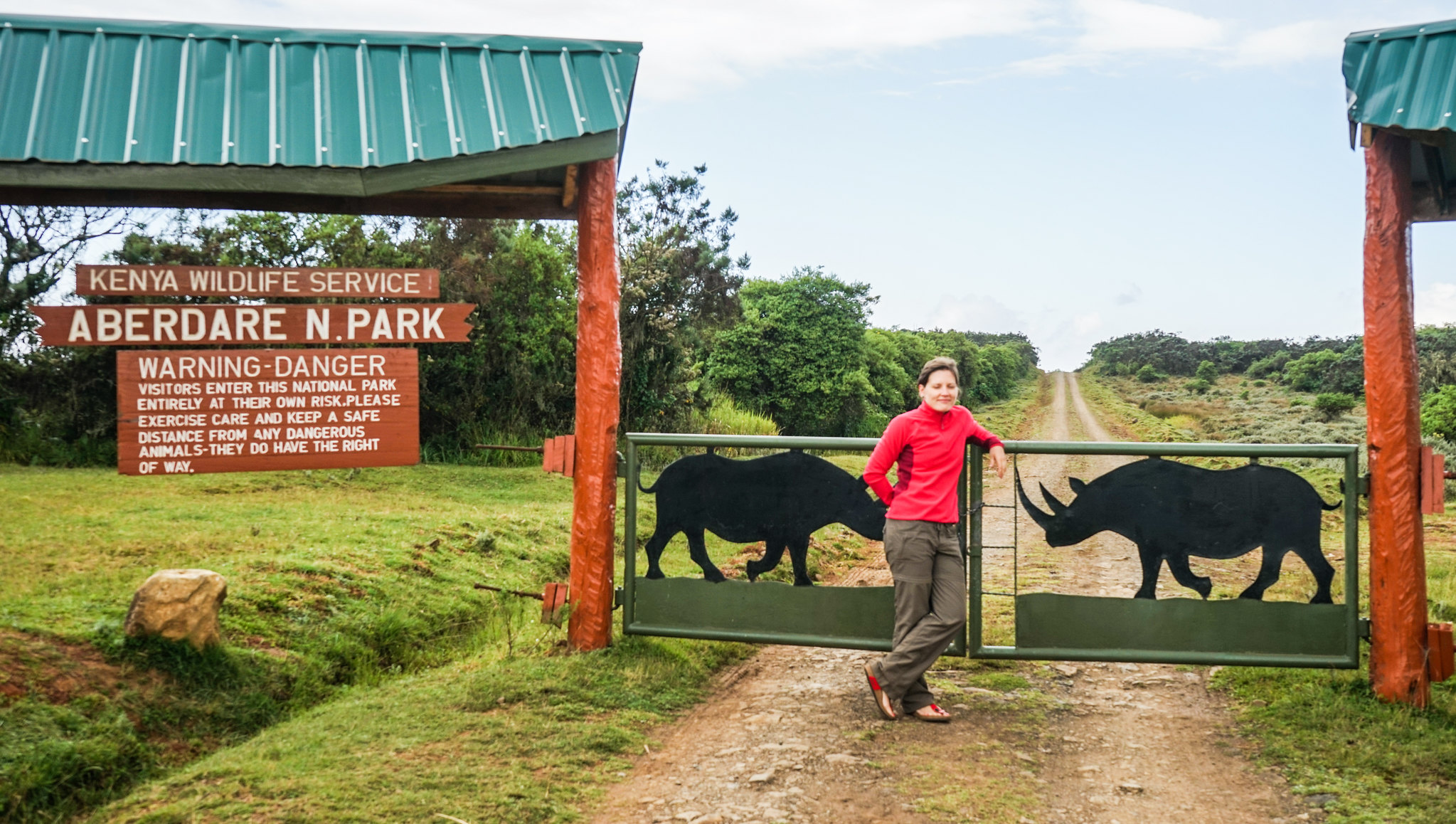
The park can be accessed through four gates: Wanderis, Kiandongoro, Shamata, and the Rhino Gate each offering a different entry point into this layered and endlessly rewarding wilderness.
Waterfalls and Rivers
The Aberdares are blessed with exceptional rainfall, and the rivers and waterfalls that this rainfall creates are among the park’s most spectacular and memorable features. The Karura, Chania, and Gura Rivers carve their way through the mountain landscape, giving rise to three magnificent waterfalls — the Chania Falls, the Gura Falls, and the Karura Falls — each one a breathtaking testament to the raw power of water meeting ancient volcanic rock.
The Karura Falls is the most dramatic of the three, plunging more than 300 meters in a sheer, thunderous drop that can be appreciated from two separate viewing stations positioned on either side of the gorge. All waterfall visits must be undertaken in the company of an armed guide a reminder that this is genuine wilderness, where buffalo and elephant move freely through the surrounding forest.
For travelers with a taste for something a little different, the Aberdares also offer one of Kenya’s most unusual and rewarding safari experiences a day’s trout fishing on the Karura and Chania Rivers. The controlled, swollen highland rivers present a genuine and exhilarating challenge to skilled anglers, and the setting cool, green, and quietly dramatic is a world away from the dust and heat of the savannah.
Wildlife
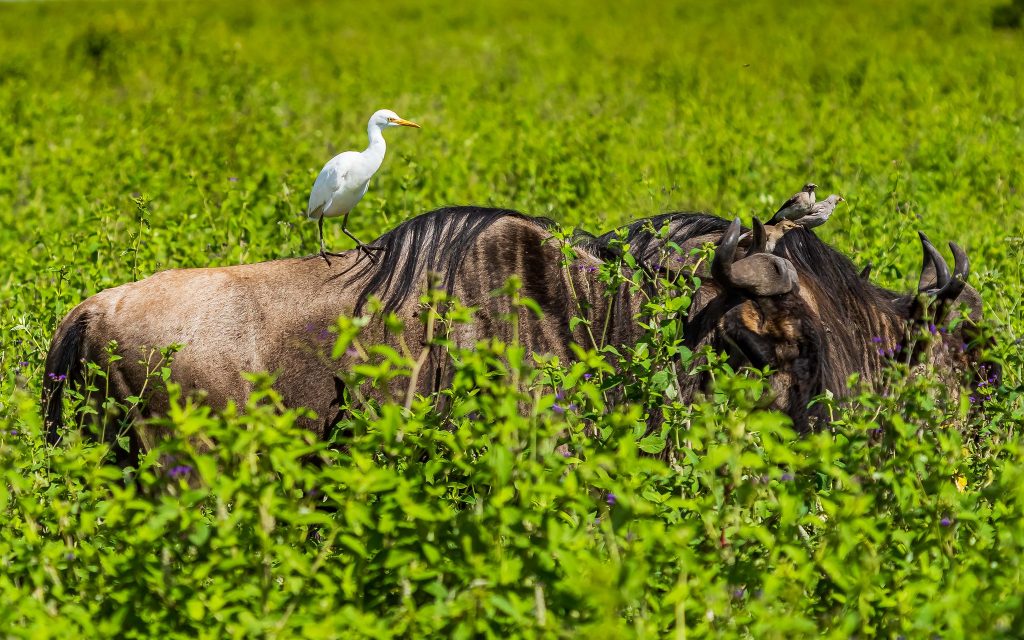
The Aberdares National Park is home to a remarkable and varied collection of wildlife, much of it adapted to the cool, forested highland environment in ways that make it quite distinct from the species found in Kenya’s lowland parks. Among the most commonly encountered animals are elephants, buffalos, lions, bongos, elands, bushbucks, reedbucks, warthogs, bush pigs, serval cats, and Sykes monkeys – a rich and rewarding roster for any wildlife enthusiast.
The park’s most celebrated and precious residents, however, are its black rhinos. The Aberdares holds one of Kenya’s smallest and most carefully protected surviving populations of this critically endangered species, and the Kenya Wildlife Service dedicates considerable resources to their care and protection. Your safari vehicle driver will take you to the area where the rhinos were last located – a quietly thrilling experience that underscores just how rare and precious these animals truly are.
History: The Mau Mau and the Fight for Independence
Beyond its natural wonders, the Aberdares National Park holds a profound and important place in Kenya’s national history. During the 1950s, the dense forests of the Aberdares served as the primary hideout and operational base for the Mau Mau freedom fighters – Kenyan rebels who took up arms against British colonial rule in their determined struggle for independence. The forest gave the Mau Mau shelter, concealment, and the ability to wage a guerrilla campaign that ultimately contributed to Kenya’s independence in 1963. To walk in these forests is to walk in the footsteps of those who gave everything for their country’s freedom a dimension of the Aberdares experience that adds extraordinary historical depth to an already remarkable destination.
Why Visit the Aberdares?
The Aberdares offer a safari experience that is genuinely unlike anything else in Kenya cool mountain air, ancient misty forests, thundering waterfalls, rare highland wildlife, world-famous tree lodge experiences, trout fishing, and a landscape saturated in both natural beauty and historical significance. For travelers seeking to go beyond the classic savannah safari and discover a more intimate, layered, and deeply atmospheric side of Kenya, the Aberdares are an unmissable destination.
Let us at The Travel Cafe craft the perfect Aberdares itinerary for you whether as a standalone highland adventure or woven into a broader Kenya safari that takes in the Maasai Mara, Samburu, Amboseli, and the Kenya coast.