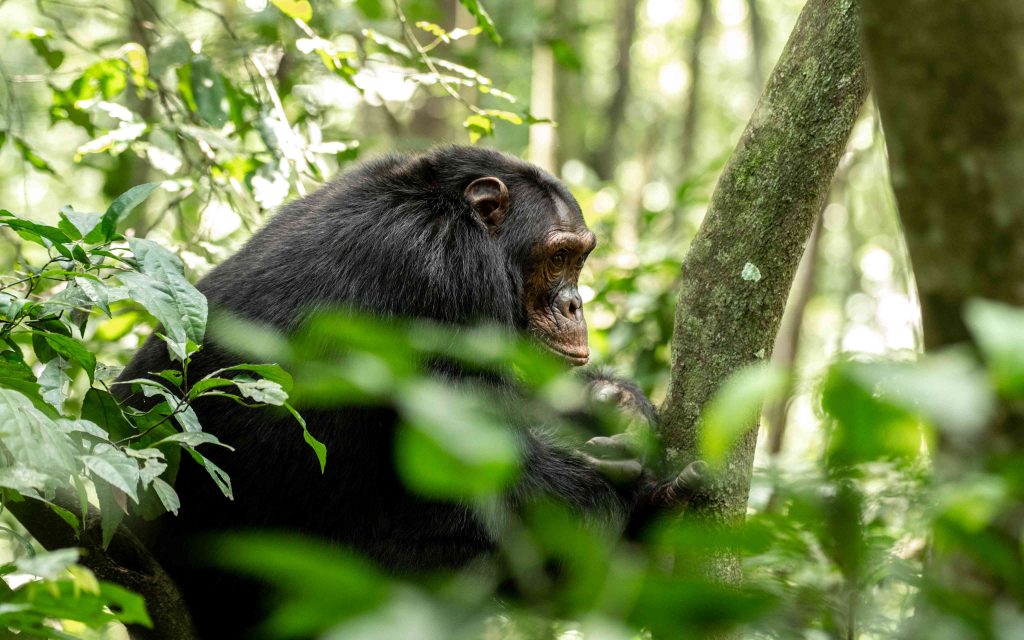
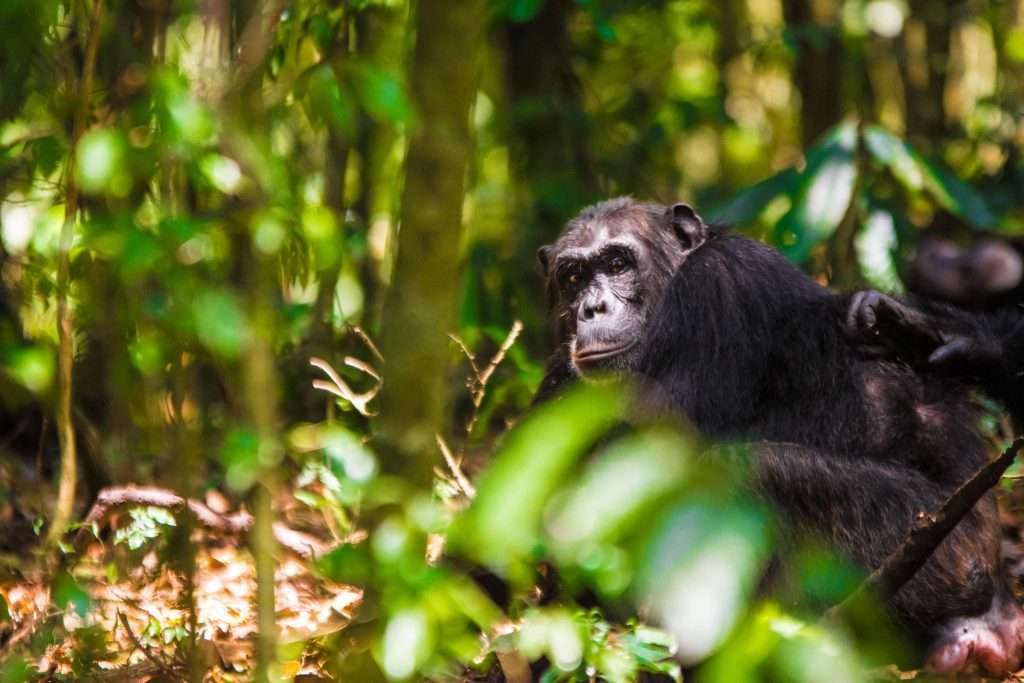
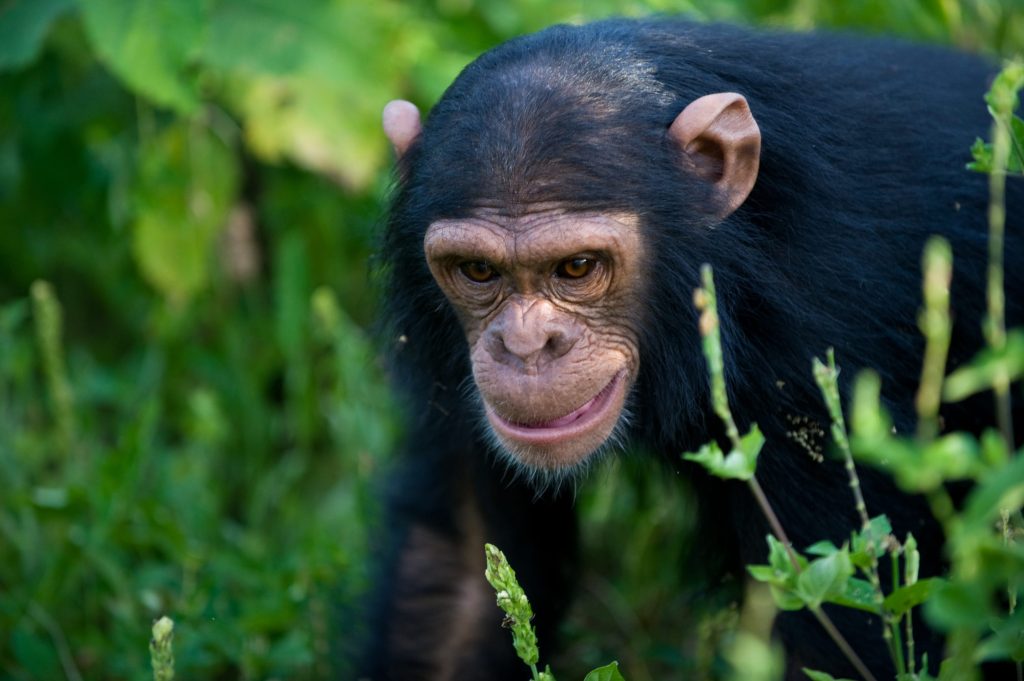
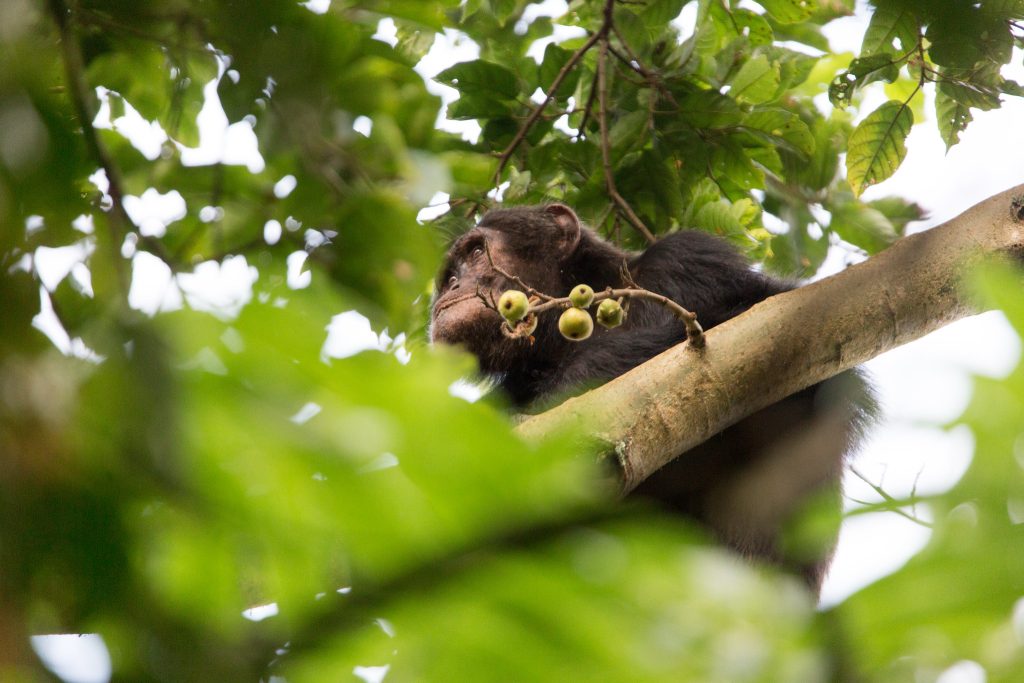
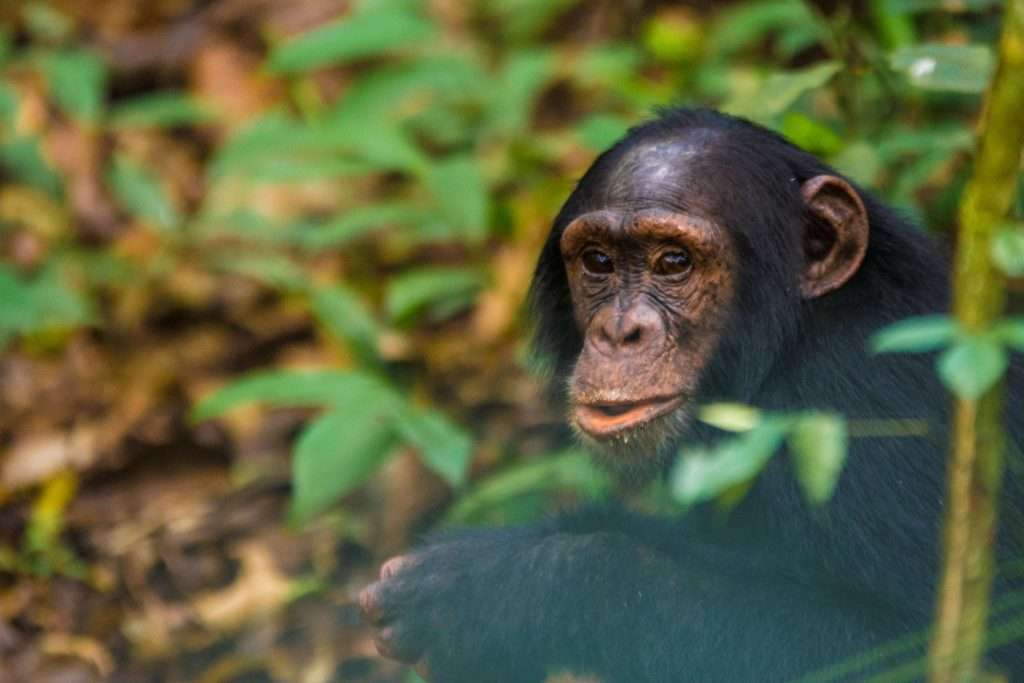
Uganda has quietly earned its place as one of the world’s most rewarding destinations for primate lovers. While gorilla trekking often takes center stage, there’s something uniquely thrilling about following chimpanzees through the forest. They are fast, vocal, and incredibly expressive so much like us that the experience feels surprisingly personal. Sharing over 98% of our DNA, chimpanzees offer a rare glimpse into our own evolutionary story, and seeing them in the wild is nothing short of unforgettable.
Why Chimpanzee Trekking Feels So Special
Unlike many wildlife encounters, chimpanzee trekking is dynamic and unpredictable. One moment the forest is quiet, and the next it’s alive with hoots, movement, and energy. Watching chimpanzees interact, feeding, grooming, calling to each other feels strikingly familiar and deeply engaging.
Trekking vs. Habituation Experience
There are two ways to experience chimpanzees in Uganda, and each offers something different.
Chimpanzee Trekking:
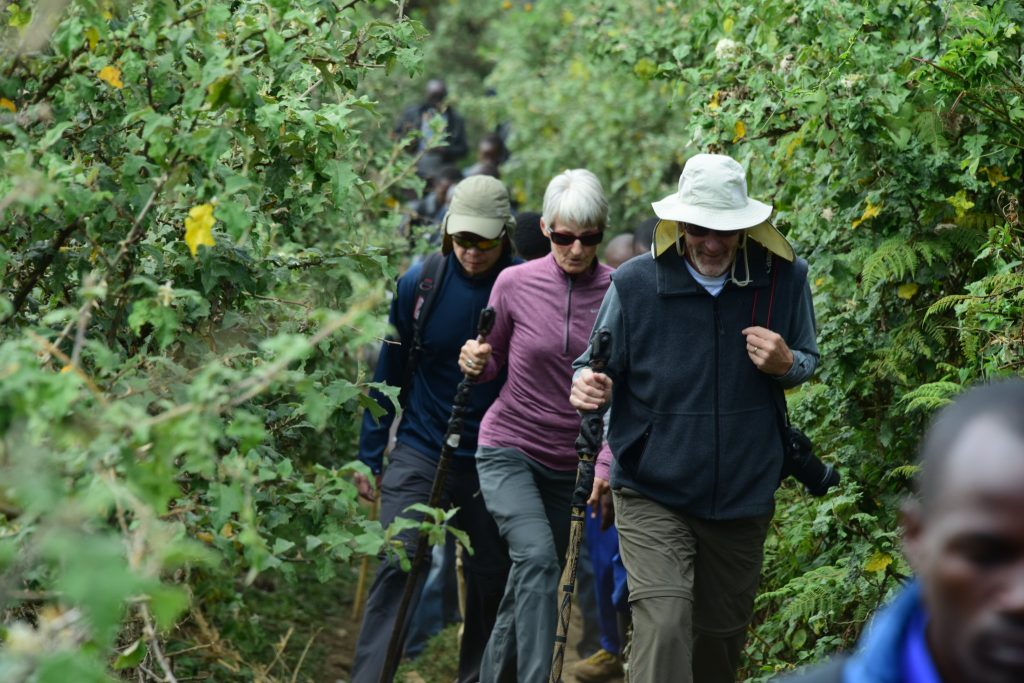
A shorter experience where you hike through the forest to find a habituated group and spend one hour observing them.
Chimpanzee Habituation Experience:
A deeper, more immersive journey where you join researchers and spend several hours with chimpanzees as they go about their day.
Kibale Forest National Park – The Primate Capital
For many travelers, the journey into Uganda’s chimpanzee world begins in Kibale Forest. Stepping beneath its dense canopy, you’re immediately surrounded by the sounds of a living rainforest. The experience builds slowly, You hear distant calls and rustling leaves long before you catch a glimpse of movement above. Then suddenly, the forest reveals its secret as chimpanzees appear, swinging effortlessly through the trees. With one of the highest populations in Africa, encounters here feel both intimate and almost guaranteed.
Murchison Falls National Park – Budongo Forest Experience
In Budongo Forest, the atmosphere shifts to something quieter and more reflective. Towering mahogany trees rise high overhead, creating a calm, almost cathedral-like setting. The forest feels still at first, inviting you to move slowly and listen carefully. Then, without warning, the silence breaks as chimpanzees move swiftly through the canopy, bringing a sudden burst of energy to an otherwise peaceful landscape.
Queen Elizabeth National Park – Kyambura Gorge Adventure
Kyambura Gorge offers one of the most dramatic trekking environments in Uganda. From the open savannah above, it’s hard to imagine the lush forest hidden below. But as you descend into the gorge, the scenery transforms completely. The air cools, the vegetation thickens, and the sense of entering a hidden world becomes undeniable. Trekking here feels cinematic, with every step revealing new beauty and the possibility of encountering chimpanzees in this striking natural setting.
Ngamba Island Chimpanzee Sanctuary – Close Encounters
For a more relaxed and intimate experience, Ngamba Island offers a different perspective. Surrounded by the calm waters of Lake Victoria, this sanctuary is home to rescued chimpanzees. There’s no challenging hike here, Instead, you spend time observing their behavior up close, gaining insight into their lives and the conservation efforts that protect them. It’s a quieter, more reflective experience that leaves a lasting impression.
To experience chimpanzee trekking, you’ll need a permit from the Uganda Wildlife Authority. These permits are limited to protect both the animals and their environment, so booking in advance is essential. Most travelers arrange everything through tour operators, making the process simple and stress-free.
What to Pack for the Trek
Preparing well makes the experience far more enjoyable. Bring sturdy hiking boots for muddy trails, wear long-sleeved clothing for protection, and carry a light rain jacket for sudden weather changes. Don’t forget water, snacks, insect repellent, and a camera—though some of the best moments are simply meant to be lived.
Rules That Protect You and the Chimpanzees
To keep both visitors and wildlife safe, a few important rules are always followed. You must keep a safe distance, avoid trekking if you’re unwell, and listen carefully to your guide. Flash photography and loud noise are not allowed, ensuring the chimps remain undisturbed in their natural environment.
Best Time to Visit Uganda for Chimpanzee Trekking
Chimpanzee trekking is possible throughout the year, but the experience changes with the seasons. The dry months from June to September and December to January offer easier hiking conditions, while the wetter months bring lush scenery and often shorter treks as chimpanzees stay closer to food sources.
The Experience That Stays With You
What truly sets chimpanzee trekking apart is the connection it creates. These animals move, communicate, and interact in ways that feel incredibly familiar. By the end of the trek, it’s no longer just about wildlife, it becomes something more personal, more meaningful.
Standing in the forest, listening to their calls echo through the trees, you begin to understand just how closely we are linked to the natural world. And that realization is what makes the experience unforgettable.